Two different tunes have been called “Blackberry Blossom.” The one most fiddlers and pickers play now was recorded by Fiddlin’ Arthur Smith as the Arthur Smith Trio, with Alton and Rabon Delmore on guitars, in New Orleans on 22 January 1935, and Bluebird issued it as B-5896 that April. The Fiddler’s Companion says Smith’s tune is different from the Kentucky tune of the same name and “may have been an original of his.” A family story, which the Companion quotes from Charles Wolfe and Barry Poss, tells of Smith playing the tune over WSM, the station running a contest to name it, and a woman in Arkansas winning with “Blackberry Blossom.” On Smith’s 1935 recording the second strain brings in an E major chord; later versions commonly use E minor.
The older tune is the one Kentucky fiddlers had played under that name, according to Wolfe and Poss, since before the Civil War. The Kentucky fiddler Dick Burnett recorded a version in 1930 that became the model for many southern Kentucky and northern Tennessee settings; Burnett said he learned it from Ed Haley, the blind fiddler from Ashland, Kentucky, for whom it was a signature tune, although Haley never recorded it commercially. To tell it from Smith’s tune it is often called “Garfield’s Blackberry Blossom.” One story, from Jean Thomas, says a General Garfield named the tune during the Civil War after hearing a soldier play it on the harmonica, and the fiddler Ed Morrison of Boyd County, Kentucky, repeated the Garfield tradition when he recorded the tune for the Library of Congress in 1930 at the American Folk Song Festival.
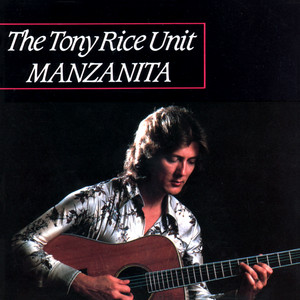
Alan Jabbour said that Smith’s tune supplanted an earlier “Blackberry Blossom,” played by Santford Kelly of Morgan County, Kentucky, which is now represented by the tune “Yew Piney Mountain”; the Fiddler’s Companion notes that Betty Vornbrock and others have heard a similarity between “Garfield’s Blackberry Blossom” and “Yew Piney Mountain.” Later recordings of the tune include Tony Rice’s on Manzanita and Mark O’Connor’s on Markology, both on Rounder, and Doc Watson’s on The Essential Doc Watson, on Vanguard.