“Eighth of January” is an American fiddle breakdown in D major, named for 8 January 1815, the day Andrew Jackson’s small army routed a British force of about eight thousand at New Orleans. The battle came after the treaty ending the War of 1812 had been signed, though neither side knew it. The tune was first called “Jackson’s Victory,” and through the nineteenth century the anniversary of the battle was widely kept with parties and dances, especially in the South. Around the time of the Civil War, when Jackson’s standing had fallen, the tune was renamed for the date instead of the man.
How old the melody is remains in dispute. Tom Carter wrote in 1975 that some regard it as a fairly modern piece remade from an older tune called “Jake Gilly.” Tom Rankin, ten years later, suggested it might be older than the battle it commemorates, and noted that, unlike many American fiddle tunes, it has no obvious British ancestor. Samuel Bayard collected a related tune in Pennsylvania as “Chase the Squirrel,” and Drew Beisswenger has pointed to its likeness to the singing games “Old Dan Tucker” and “Girl’s A-Fooling.” Versions vary widely, and some fiddlers take the second strain an octave higher.
Collectors found it everywhere they looked. In 1939 Herbert Halpert recorded it for the Library of Congress from the Mississippi fiddlers John Hatcher, W.E. Claunch, Enos Canoy and Hardy Sharp, and Vance Randolph recorded it from Ozark fiddlers in the early 1940s. Cuje Bertram, an African American fiddler from the Cumberland Plateau of Kentucky, put it on a home tape for his family in 1970. On commercial records, Dr. Humphrey Bate and His Possum Hunters cut it in Atlanta on 3 March 1928 with Bill Barret, not the band’s regular fiddler Oscar Stone, playing the tune; Brunswick issued it on 239 with “Billy in the Low Ground.” The Arkansas Barefoot Boys, with Cyrus Futrell fiddling, recorded it the same year.
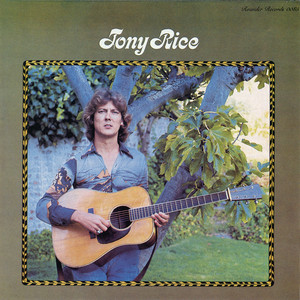
In 1936 Jimmy Driftwood, then teaching school in Timbo, Arkansas, wrote new words to the tune as “The Battle of New Orleans,” to bring the history alive for his pupils. Johnny Horton’s 1959 Columbia recording of Driftwood’s song reached number one on the Billboard Hot 100 and won Grammys for Best Country & Western Performance and Song of the Year. The fiddle tune kept its own life on record: Tommy Jackson released it on Dot 1218 in 1954, backed with “Golden Slippers”; Eric Weissberg played it as a banjo solo on New Dimensions in Banjo & Bluegrass (Elektra, 1963); and Tony Rice recorded it in Berkeley in July 1976 with David Grisman, Darol Anger and Todd Phillips for his Rounder album Tony Rice (1977).