Earl Scruggs named “Flint Hill Special” for the Flint Hill community of Cleveland County, North Carolina, near Shelby. He was born there on 6 January 1924, on a forty-acre cotton farm. According to the Earl Scruggs Center, he began picking his father’s open-back banjo at four, and by ten he had moved on to a three-finger style built on a forward roll learned from older players in the area.
Lester Flatt, Earl Scruggs and the Foggy Mountain Boys recorded the tune on 9 November 1952 at Castle Studio in Nashville. It was a small lineup: Flatt on guitar, Scruggs on banjo, Curly Seckler on mandolin and Jody Rainwater on bass, with no fiddle. Columbia released it on 12 December 1952 as a 78 and a 45, number 21054, backed with the vocal “Dim Lights, Thick Smoke,” and credited the tune to Scruggs.
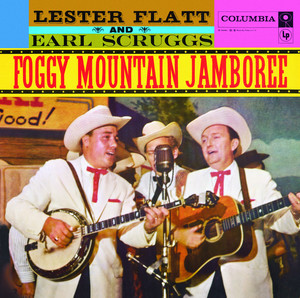
The tune uses a device Scruggs made himself. After recording “Earl’s Breakdown” in 1951 he fitted his banjo with homemade cam tuners, which let him drop the second and third strings out of tune and bring them back in the middle of a break. The effect is heard in four of his pieces that Columbia later gathered on the 1957 LP Foggy Mountain Jamboree: “Earl’s Breakdown,” “Foggy Mountain Chimes,” “Randy Lynn Rag” and “Flint Hill Special,” which opens the album. Those four inspired the banjoist Bill Keith. In 1963 he and his college friend Dan Bump designed a more streamlined tuner that needed no drilling, and in January 1964 they founded the Beacon Banjo Company to make it. Scruggs’s own originals are now on display at the Earl Scruggs Center in Shelby. Foggy Mountain Jamboree entered the Grammy Hall of Fame in 2012.
“Flint Hill Special” stayed in the band’s shows. They played it at their Carnegie Hall concert on 8 December 1962, with Billy Powers on guitar, Paul Warren on fiddle and Buck Graves on bass, and it was issued the following year on Flatt & Scruggs at Carnegie Hall!