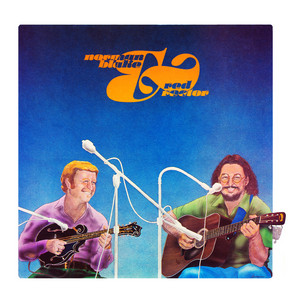
“Red Wing” was written by Kerry Mills, with words by Thurland Chattaway, and published by F. A. Mills in New York in 1907 as “An Indian Intermezzo,” also subtitled “An Indian Fable.” It belonged to a fashion for Native American subjects in American popular song in the first decade of the century. The lyric tells of “a shy little prairie maid” who waits for a warrior who rode away to battle and fell there. Its chorus, “Now the moon shines tonight on pretty Red Wing,” is the part most people remember. Several writers have noticed that the first part of the melody resembles “The Happy Farmer,” No. 10 of Robert Schumann’s Album for the Young, Op. 68 (1848), though the likeness does not extend to the second part. Mills also wrote “Georgia Camp Meeting,” “Whistlin’ Rufus” and “Barn Dance,” all of which also passed into fiddlers’ repertoires.
The first records came quickly. Frank C. Stanley and Henry Burr sang it for Columbia on 31 August 1907, and S. H. Dudley and Harry Macdonough recorded it for Victor in January 1908. The folklorist Jim Kimball believes it was commonly recorded on early 78s as a two-step. In April 1924 Ernest Thompson sang it with his own guitar and harmonica for Columbia, and the same year George Reneau, billed as “The Blind Musician of the Smoky Mountains,” recorded it for Vocalion. The Fox Chasers, a string band of fiddle, banjo, guitar and bones whose members went unrecorded, cut it for OKeh in San Antonio, Texas, on 11 June 1930. Clayton McMichen and his Georgia Wildcats recorded it in 1945.
As a dance tune it spread widely. It was a staple at old-time dances in northern Wisconsin and was in the repertoires of the Arizona fiddler Kenner C. Kartchner and the Pennsylvania dance fiddler Harry Daddario. It was popular in New England, and the notes to the Smithsonian Folkways anthology Mademoiselle, voulez-vous danser? (1999) call it an almost canonical part of the Franco-American tune repertory in Québec. In America, singing calls for western square dances were set to it. In East Anglia it was a common dance tune, played as a polka. British soldiers of the First World War sang their own words to it, beginning “the moon shines bright on Charlie Chaplin”. In Australia, according to the Australian Graham McDonald, nearly every old-time dance musician played it, and for almost every kind of dance. In 1940 Woody Guthrie wrote new words to the tune as “Union Maid,” opening “There once was a union maid” in place of Chattaway’s Indian maid.