“Stoney Point” is a breakdown and reel known throughout the United States, in G major for the A and C parts and E Aeolian for the B part, according to the Fiddler’s Companion. R.P. Christeson (1973) said it descended from “Kelton’s Reel,” published in Ryan’s Jigs and Reels. It was printed in America as early as 1844, as “Old Dad,” with words, in Old Dan Emmett’s Original Banjo Melodies; as “Stony Point Reel” in Winner’s Music of the Dance (1866); and as “Pig-Town Fling” in White’s Unique Collection of Jigs and Reels (Boston, 1896).
The title may come from the Revolutionary War battle in which General Anthony Wayne took a fortified position at Stony Point on the lower Hudson River. The tune has gone by many other names: “Hop Squirrel” in the Franklin and Floyd County area of Virginia, “Hop Skip Squirrel” in the repertoire of Wade Enloe of Eldon, Missouri, “Wild Horses” on Clark Kessinger’s Rounder album, and “Hop Along, Sally,” “Off with Your Jacket” and “Pigtown Fling” elsewhere. Samuel Bayard took down a version from James Marr in Missouri in 1949, and the Library of Congress recorded W.A. Bledsoe of Meridian, Mississippi, playing it in 1939.
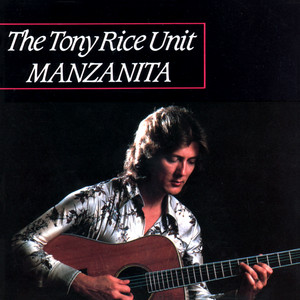
Tony Rice recorded it for the Tony Rice Unit’s Manzanita (Rounder 0092) in January or February 1978 at 1750 Arch Street in Berkeley, California, with Sam Bush on fiddle, Jerry Douglas on dobro and Todd Phillips on bass. Brother Oswald and Charlie Collins (Oz and Charlie, Rounder 0060) and Oscar and Eugene Wright (Rounder 0089) are among others who recorded it.