
Gordon Lightfoot
Gordon Lightfoot (1938–2023) was a Canadian singer, songwriter and guitarist whose songs crossed from folk into country, pop and bluegrass. “Early Mornin’ Rain” and “For Lovin’ Me” were recorded by Ian & Sylvia, Peter, Paul and Mary, Elvis Presley and Bob Dylan, Marty Robbins took “Ribbon of Darkness” to No. 1 on the U.S. country chart, and his own “Sundown” topped the American pop chart in 1974. Bluegrass musicians from J. D. Crowe and Mac Wiseman to Tony Rice recorded his songs.
He was born Gordon Meredith Lightfoot Jr. on 17 November 1938 in Orillia, Ontario. As a boy soprano he sang in the choir of Orillia’s St. Paul’s United Church, and at twelve, after winning a competition for boys whose voices had not yet changed, he made his first appearance at Massey Hall in Toronto, a stage he would return to more than 170 times. In 1958 he went to Los Angeles to study jazz composition and orchestration at the Westlake College of Music, supporting himself by singing on demonstration records and writing commercial jingles, and in 1960 he came home to Toronto, where he became a regular in the city’s folk coffeehouses.
His first records were pop and country sides. With Terry Whelan he sang as the Two Tones, whose live album was recorded at the Village Corner in Toronto on 20 January 1962, and in the early 1960s he cut singles at RCA’s studio in Nashville with Grady Martin, Floyd Cramer and the Anita Kerr Singers; “(Remember Me) I’m the One” reached No. 3 in Canada. After a year in Britain hosting the BBC’s Country and Western Show, he returned to Canada in 1964, played the Mariposa Folk Festival and began to be known as a songwriter.
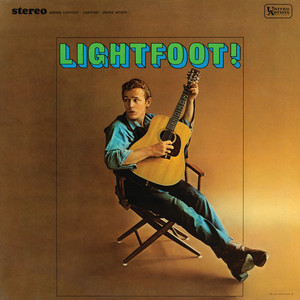
In 1965 Albert Grossman became his manager and United Artists signed him. He had already recorded in New York in November 1964, with John Court producing and the guitarists Bruce Langhorne and David Rea and the bassist Bill Lee behind him, cutting “Early Mornin’ Rain,” “For Lovin’ Me,” “I’m Not Sayin’” and “Ribbon of Darkness.” Before his versions came out, Ian & Sylvia recorded the first two, and Peter, Paul and Mary followed in 1965; Marty Robbins’s “Ribbon of Darkness” became a No. 1 country hit, and George Hamilton IV recorded “Early Mornin’ Rain” in January 1966. His first album, Lightfoot!, appeared in January 1966.
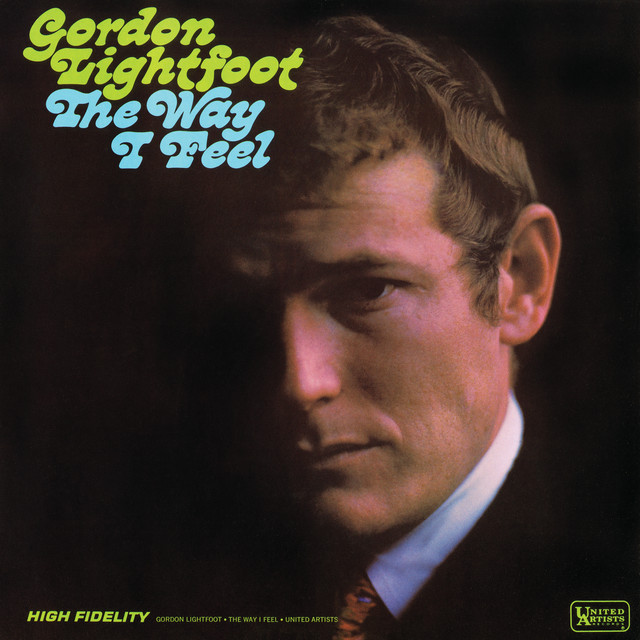
Four more albums followed on United Artists, much of them recorded in Nashville with session players such as Charlie McCoy and Kenneth Buttrey. The CBC commissioned “Canadian Railroad Trilogy” for a broadcast opening Canada’s centennial on 1 January 1967; he recorded it in Nashville the next day for The Way I Feel (1967). Did She Mention My Name and Back Here on Earth came out in 1968, and the live Sunday Concert (1969) was taken from a Massey Hall show of 30 March 1969, with Red Shea on guitar and Rick Haynes on bass.
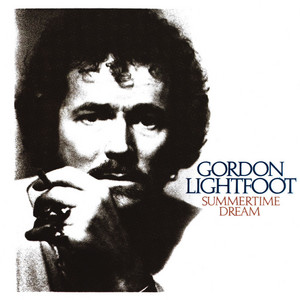
Moving to Reprise, he recorded “If You Could Read My Mind” in Los Angeles in November 1969 with Lenny Waronker producing; it gave him his first major international hit early in 1971, and the album, first issued as Sit Down Young Stranger (1970), was retitled for it. Summer Side of Life (1971), partly cut at Woodland Sound in Nashville, included “Ten Degrees and Getting Colder.” He recorded “Sundown” and “Carefree Highway” at Eastern Sound in Toronto in November 1973; “Sundown” went to No. 1 in the United States and Canada in June 1974, his only American No. 1, and “Carefree Highway” reached the top ten in both. Cold on the Shoulder followed in 1975. “The Wreck of the Edmund Fitzgerald,” his account of the Edmund Fitzgerald, which sank in a storm on Lake Superior on 10 November 1975 with all twenty-nine of its crew, was recorded at Eastern Sound that December and released on Summertime Dream (1976); it reached No. 2 on the Billboard chart and No. 1 in Canada.
He stayed with Warner Bros. for Endless Wire (1978), Dream Street Rose (1980), Shadows (1982), Salute (1983), East of Midnight (1986), Waiting for You (1993) and A Painter Passing Through (1998), recorded at Grant Avenue Studio in Hamilton, Ontario, where he played six-string, twelve-string and high-strung guitars. Harmony (2004) was his nineteenth album of original songs. His last, Solo (Warner Canada, 2020), was recorded at Grant Avenue in 2019 with only his own voice and guitar. He played his final concert on 30 October 2022 in Winnipeg, and he died at Sunnybrook Health Sciences Centre in Toronto on 1 May 2023, aged 84.
His songs entered bluegrass early. J. D. Crowe & the New South recorded “For Lovin’ Me” for Bluegrass Evolution (1973) and later “Did She Mention My Name”; the Bluegrass Alliance cut “Early Mornin’ Rain” on Newgrass; Mac Wiseman devoted a whole album to him, Mac Wiseman Sings Gordon Lightfoot (1977); and Joe Val & the New England Bluegrass Boys recorded “Ribbon of Darkness” in 1981. Tony Rice made the songs part of his solo work: the title song of Cold on the Shoulder (1984), “Early Morning Rain” on Me & My Guitar (1986) and “Shadows” on Native American (1988), and in 1996 Rounder gathered his Lightfoot recordings on Tony Rice Sings Gordon Lightfoot.
- 1965–1977: sixteen Juno Awards (folk singer, male vocalist and composer of the year)
- 1986: Canadian Music Hall of Fame
- 1998: Canada’s Walk of Fame
- 2001: Canadian Country Music Hall of Fame
- 2003: Companion of the Order of Canada
- 2012: Songwriters Hall of Fame (New York), inducted 24 June



-
Summertime Dream1976 · Reprise
-
Cold on the Shoulder1975 · Reprise MS 2206
-
Summer Side of Life1971 · Reprise Records
-
Back Here on Earth1968 · United Artists UAS 6672
-
The Way I Feel1967 · United Artists UAS 6587
-
Lightfoot!1966
-
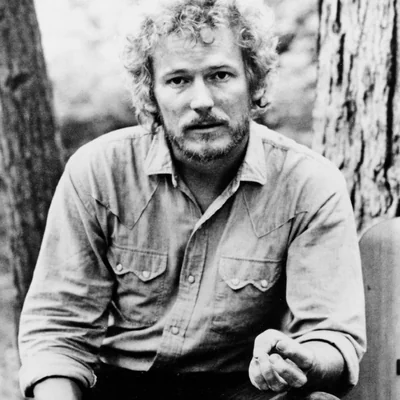 Gordon LightfootPlayed on with Gordon Lightfoot
-
Red SheaPlayed on with Gordon Lightfoot
-
John StockfishPlayed on with Gordon Lightfoot
-
Rick HaynesPlayed on with Gordon Lightfoot
-
Terry ClementsPlayed on with Gordon Lightfoot



