“Orange Blossom Special” is a fiddle tune about a train. The Orange Blossom Special was a deluxe winter-season train of the Seaboard Air Line Railroad, running from New York to Miami, and it began service on 21 November 1925. Ervin T. Rouse (1917–1981), who lived in the Everglades, wrote the tune in 1938 and copyrighted it in his own name. The Florida fiddler Chubby Wise said for years that he had written it with Rouse: in his account the two toured the train at the Jacksonville terminal in the middle of the night and wrote the melody that evening, in under an hour, at Wise’s house. Rouse never contested that claim, and the copyright stayed with him.
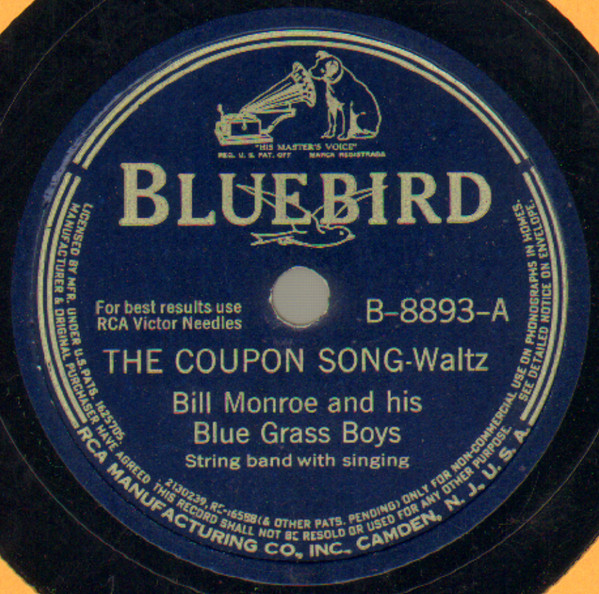
The Fiddler’s Companion reports that the first recording appears to be a 1938 one by the fiddler Tommy Magness with Roy Hall’s group, left unissued, and that Ervin Rouse and his brother Gordon recorded it in New York in June 1939. It did not become a hit, the Companion adds, until Bill Monroe’s recording. Monroe and the Blue Grass Boys cut it on 2 October 1941 at the Kimball Hotel in Atlanta, with Art Wooten on fiddle, Pete Pyle on guitar and Bill Wesbrooks on bass; Wooten and Monroe sang. Bluebird issued it in January 1942, backed with “The Coupon Song” (B-8893).
Tommy Jackson recorded it for Dot in 1953 (Dot 1169, with “Draggin’ the Bow”), and the Stanley Brothers cut it at RCA Victor’s studio in Nashville on 5 April 1955, with Joe Meadows on fiddle; Mercury issued it that July. Johnny Cash recorded it in 1964 and Columbia released it as a single on 4 January 1965, the title track of his album Orange Blossom Special. Flatt & Scruggs recorded it as an instrumental at Columbia’s Nashville studio on 6 March 1967, with Paul Warren on fiddle and Charlie McCoy on harmonica. Wise made his own recording for the Stoneway LP Chubby Wise and His Fiddle, and Charlie Daniels included a live instrumental version, recorded at the War Memorial Auditorium in Nashville on 4 October 1974, on the album Fire on the Mountain.