
Douglas Kershaw
Doug Kershaw is a Cajun fiddler, singer and songwriter from Louisiana who wrote and first recorded “Louisiana Man,” a Top Ten country hit for him and his brother Rusty in 1961 and a song since recorded by more than 800 artists. Known as “the Ragin’ Cajun,” he reached a national audience on the first Johnny Cash Show in 1969 and made a long run of albums for Warner Bros. in the 1970s.
Douglas James Kershaw was born on 24 January 1936 at Tiel Ridge in Cameron Parish, Louisiana, on a houseboat, the seventh of nine children in a family that spoke Cajun French; he did not learn English until he was eight. He started on the fiddle at five, went on to teach himself many other instruments, and played his first paying job at a Cajun bar called the Bucket of Blood, with his mother accompanying him on guitar. In 1948 he and his brothers Rusty and Nelson “Peewee” Kershaw formed a band, the Continental Playboys.
When Peewee left, Rusty and Doug carried on as a duo. They first recorded in 1953 at J. D. Miller’s studio in Crowley, Louisiana, for his Feature label, and Miller persuaded them to sing in English. On 18 May 1955, with the pianist Wiley Barkdull, they recorded “So Lovely, Baby” for Hickory in Nashville, with Chet Atkins on guitar and Doug singing and playing fiddle, and it became a country hit. The brothers joined the Louisiana Hayride in Shreveport and then the Grand Ole Opry, and kept recording for Hickory in Nashville with players such as Atkins, Hank Garland and Floyd Cramer. Doug also earned a degree in mathematics from McNeese State, and in 1958 the brothers enlisted in the Army.
Doug wrote the autobiographical “Louisiana Man” while in the service. Rusty and Doug recorded it at RCA’s Nashville studio on 18 October 1960, with Wesley Rose producing, along with “Diggy Diggy Lo” and their own “Jole Blon,” and Hickory’s album Rusty & Doug Sing Louisiana Man followed in 1961. “Louisiana Man” was a Top Ten country hit, and “Diggy Diggy Lo” did nearly as well. The duo moved to RCA Victor in 1963, with Chet Atkins producing, and to Mercury in 1965, and the brothers went separate ways around that time.
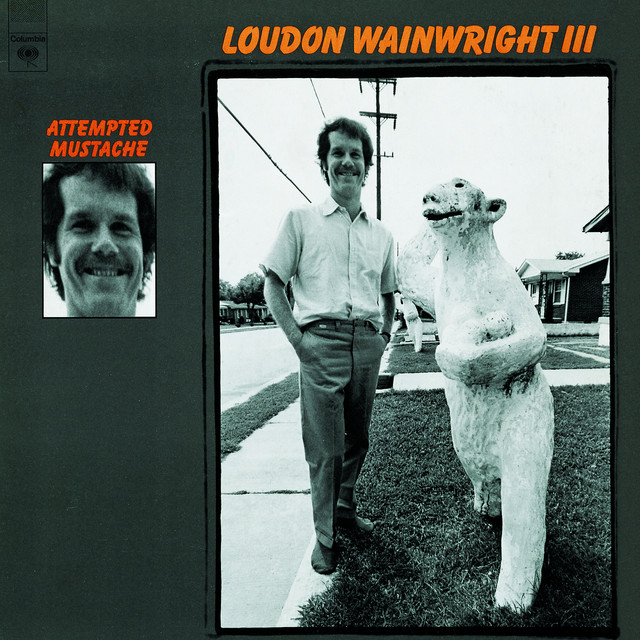
Doug’s solo career took off in June 1969, when he appeared on the debut broadcast of The Johnny Cash Show. Warner Bros. signed him that year, and he closed it with a week at the Fillmore East in New York, opening for Derek and the Dominos. In November 1969 the crew of Apollo 12 played “Louisiana Man” on their way to the Moon. Buddy Killen produced his first Warner album, The Cajun Way (1969), and later ones including Devil’s Elbow (1972); the label’s other Kershaw albums of the decade included Spanish Moss (1970), Mama Kershaw’s Boy (1974), the live Alive & Pickin’ (1975) and Ragin’ Cajun (1976). He also played fiddle on other people’s records, among them Loudon Wainwright III’s “The Swimming Song” on Attempted Mustache (1973), and appeared in the films Zachariah (1971) and Days of Heaven (1978).
“Hello Woman,” recorded in Hollywood in 1981 for his Scotti Brothers album Instant Hero, gave him a Top 40 country single, and in 1985 he recorded “My Toot Toot” in New Orleans with Fats Domino. “Cajun Baby,” a duet with Hank Williams Jr. released in 1988, was another country chart single. He returned to French-language Cajun music with Two-Step Fever (1999), recorded at Master-Trak in Crowley, and in 2014 he recorded “Jolie Blonde” and other songs with Steve Riley for the Valcour label. He was inducted into the Louisiana Music Hall of Fame in 2009, and his memoir, The Ragin’ Cajun: Memoir of a Louisiana Man, written with Cathie Pelletier, was published in 2019.
These are the recordings in our catalog that credit Douglas Kershaw. We add more all the time.
-
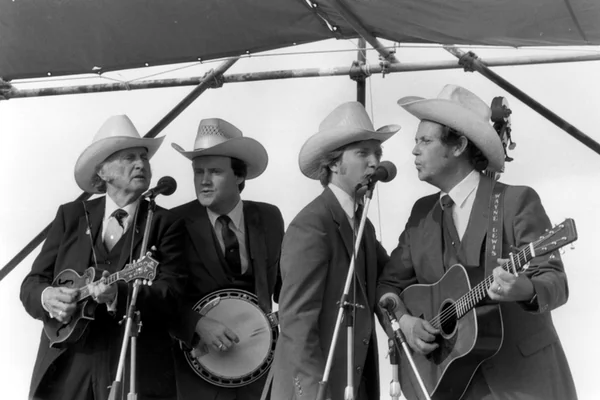 Bill Monroe and His Blue Grass BoysPlayed on with Bill Monroe and His Blue Grass Boys
-
Loudon Wainwright IIIPlayed on with Loudon Wainwright III



