
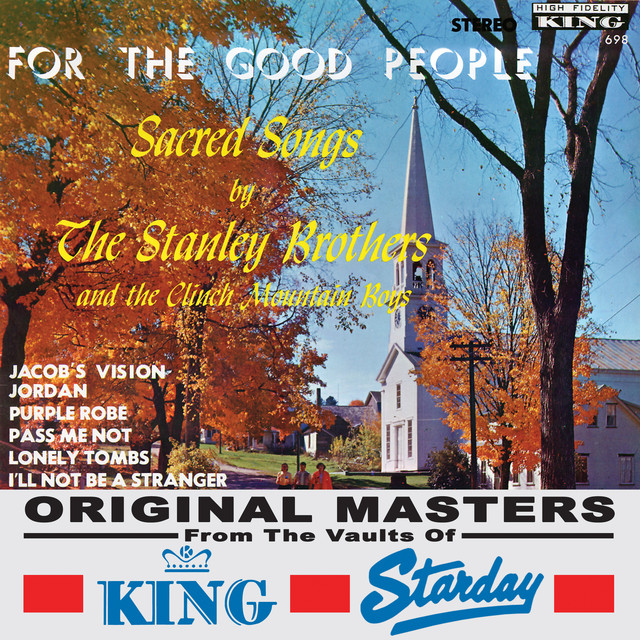
“I’ll Not Be a Stranger” is a gospel song about heaven as a city where the singer already knows people. The Stanley Brothers recorded it at King Studio in Cincinnati on 15 September 1959, during two days of sessions that produced a gospel album and a country one. The King label boss Syd Nathan wanted a sound closer to the Delmore Brothers’, so there was no fiddle or mandolin. Carter Stanley sang lead and played guitar, Ralph Stanley sang tenor, Bill Napier switched to lead guitar and sang baritone, and George Shuffler played bass and sang the bass part. The song came out in August 1960 on the LP For the Good People (King 698), and again on the first of three EPs King cut from the album.
The singer will not be a stranger on arrival, because friends and loved ones who went before will be there to meet him. The verses picture a home on streets of gold and a place with no lonely days or stormy weather, and the city is called “four square,” the word the King James Bible uses for the heavenly Jerusalem in Revelation 21:16.
Its authorship is unsettled. King’s release lists the song as public domain, and reissues of the Stanley recording call it traditional. The Ohio band the Traditional Grass recorded it at Rivertracks Studio in Louisa, Kentucky, on 21 September 1991 with Mark Rader singing lead. Rebel’s 1993 album I Believe in the Old-Time Way credited that recording to James B. Singleton, published by Stamps Quartet Music, but the same recording, reissued in 2015 on The Blues Are Still the Blues, was credited to Carter and Ralph Stanley.
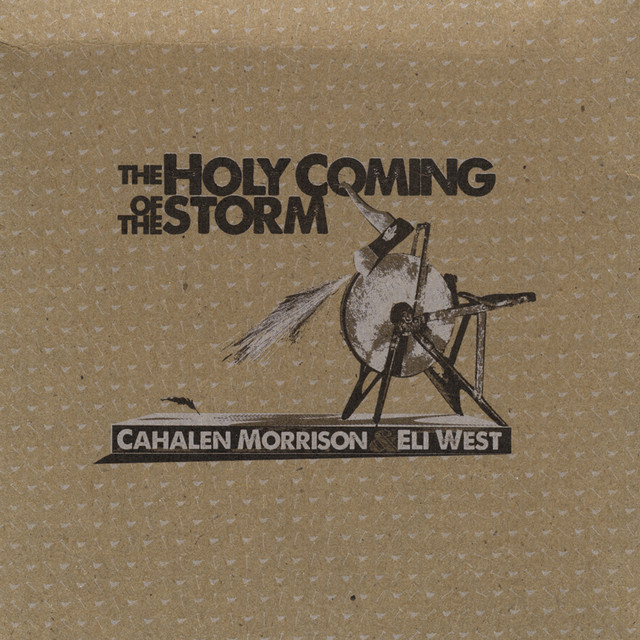
Robin and Linda Williams put it on Good News (Sugar Hill, 1995). Ginny Hawker recorded it at Trace Sound in Nashville in March 2001 for Letters from My Father (Rounder), with Tim O’Brien on lead vocal and guitar, Hawker on tenor and Darrell Scott on baritone; that track was later included on Rounder’s 2003 gospel anthology White Dove. Cahalen Morrison and Eli West recorded it for The Holy Coming of the Storm, and Kathy Kallick included it on Count Your Blessings: A Gospel Collection (Live Oak, 2011).





