“When My Blue Moon Turns to Gold Again” was written by Wiley Walker and Gene Sullivan, a fiddle-and-guitar duo who had been making records since 1939. Sullivan later described writing it after Columbia’s A&R man, Art Satherley, told the pair they would need original songs to keep recording, and said the idea came to him while driving all night from Lubbock, Texas, to Oklahoma City under a full moon.
Walker and Sullivan recorded it on 9 March 1941 at the studio of radio station WBAP in the Blackstone Hotel, Fort Worth, Texas, with Walker on fiddle and Sullivan on guitar, joined by Foy Willing on steel and Sheldon Bennett on electric guitar. OKeh released it in August 1941 (06374), backed with “Live and Let Live.” Columbia reissued the same coupling in July 1947 (37665) and again around April 1948 (20264), and the duo cut it once more in Oklahoma City in 1959 for a 45.
The singer is living on memories of a lost love that leave his heart cold, but holds on to the hope that they will come back to life. The chorus pictures the day his blue moon turns to gold and a rainbow clears the clouds, when she will be back in his arms to stay. Later verses recall her lips and kisses and the dream castles they built together, which for now live only in his dreams.
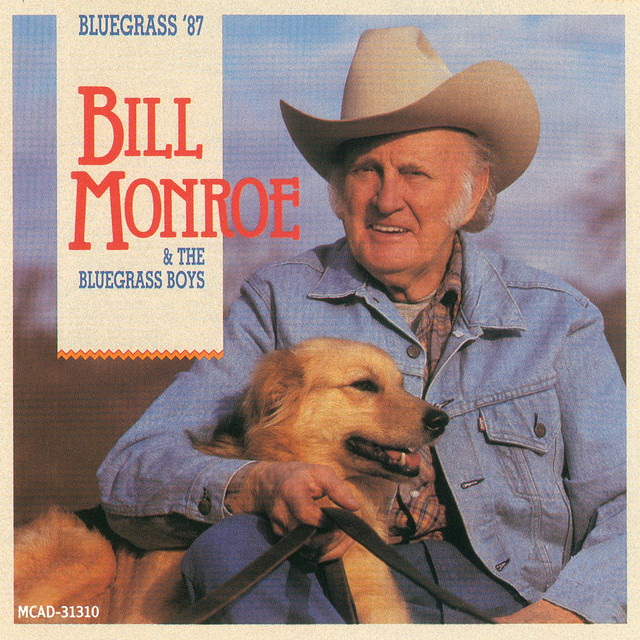
Cindy Walker recorded it for Decca in New York on 14 March 1944 (Decca 6103), and her record reached No. 5 on Billboard’s folk chart. Elvis Presley cut it at Radio Recorders in Hollywood on 2 September 1956 for his second album, Elvis. Bluegrass bands took it up in the 1960s: Jim & Jesse and the Virginia Boys recorded it on 26 June 1963 at Columbia Studio A in Nashville for their Epic LP Bluegrass Classics, and Bill Monroe and the Blue Grass Boys recorded it at Columbia’s Nashville studio on 14 October 1966, with Peter Rowan on guitar, Lamar Grier on banjo, Richard Greene on fiddle and James Monroe on bass, for the 1967 Decca LP Blue Grass Time.