“Cripple Creek” is known across the South as both a fiddle tune and a song, and it has always been more popular in the Appalachians than in the Midwest. It is number 3434 in the Roud Folk Song Index. The earliest printed words are two fragments collected by E. C. Perrow in 1909, one from East Tennessee (“Goin’ to Cripple Creek, goin’ ter Rome”) and one from South Carolina. They were published in the Journal of American Folklore in 1915. When Cecil Sharp collected in the southern Appalachians in 1917, he took down versions from Lizzie Abner of Oneida, Kentucky, and from Alice Wilson of Pineville. The verses vary from singer to singer, and some are shared with other songs. The stanza that ends “old corn likker was the cause of it all” also belongs to “Old Corn Liquor,” and the line “Roads are rocky and the hillsides’ muddy” floats in from “Sally Goodin.”
Nobody knows which Cripple Creek the title means. The Library of Congress folklorist Alan Jabbour found that the oldest Appalachian fiddlers he recorded could remember the first time they heard the tune. That led him to wonder whether it was connected with Cripple Creek, Colorado, where gold was found in 1891 and labour disputes broke out in 1903–04. The Glen Lyn, Virginia, fiddler Henry Reed (1884–1968) told Jabbour he was sixteen when he first heard it, from a man from Texas who was passing through the Tug River coal country. The folk-song writer Bob Coltman thought the tune was probably older than the 1891 strike, and that the words, and with them the title, may have been added around the turn of the century. Many musicians point closer to home instead, to the Cripple Creek that runs through Grayson and Carroll counties in Virginia to the New River, and to the community of that name south of Wytheville. The collector Mike Yates found that most Virginia musicians connect the song with Wythe County. The word itself is uncertain too. In nineteenth-century America “cripple” could mean a dense thicket in low, swampy ground, or, to lumbermen, a rocky shallow in a stream.
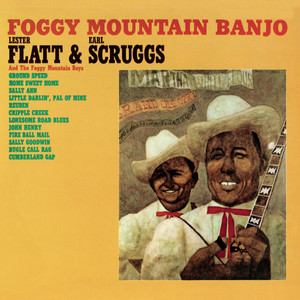
The first recording issued was made in New York on 20 August 1924 by Sam Jones, a Black one-man band from Cincinnati who recorded as Stovepipe No. 1. Columbia issued it on 201-D as “Cripple Creek and Sourwood Mountain.” Gid Tanner and Riley Puckett recorded it that year too. Charlie Poole and the North Carolina Ramblers added verses about Shootin’ Creek in Franklin County, Virginia, a district known for making whiskey. The Library of Congress recorded Luther Strong singing it in 1937, and in the early 1940s Vance Randolph recorded Ozark fiddlers playing it for the Library. On 11 August 1960 Flatt & Scruggs recorded it in Nashville, with Earl Scruggs on banjo and Paul Warren on fiddle, for the 1961 Columbia album Foggy Mountain Banjo.