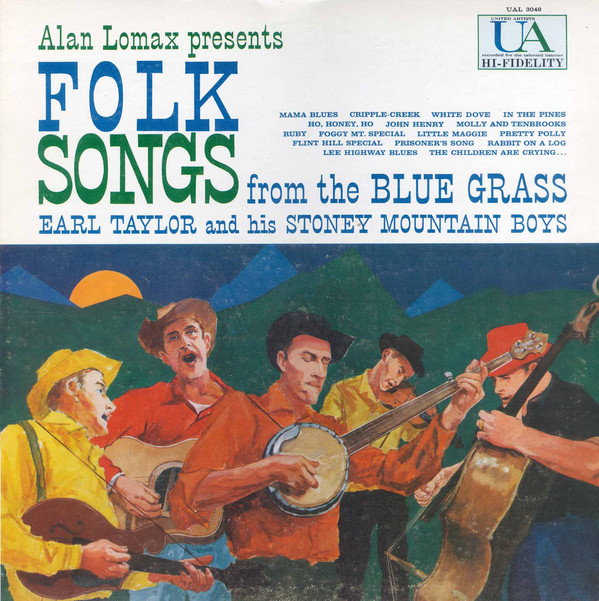
“Cripple Creek” is a traditional fiddle tune and song, widely known across the South and more popular in the Appalachians than in the Midwest. Its origin is unknown, and the tune probably has no great age: the Virginia fiddler Henry Reed (1884–1968) recalled first hearing it at sixteen, from a man from Texas who was passing through the Tug Fork coal country on the West Virginia–Kentucky border. The verses are floating ones, and the lyric has many forms. In the commonest, the singer goes up the creek on the run to have a little fun, wades it with his trousers rolled to the knee, and meets girls on the creek.
Where the name comes from is also unsettled. Some tie it to Cripple Creek, Colorado, where gold was found in 1891 and labor disputes broke out in 1903–04; most Virginia musicians place it in Wythe County, Virginia, where a community called Cripple Creek lies beside Grayson County, and a Cripple Creek of that name runs through Grayson and Carroll Counties into the New River. In the 19th century “cripple” also meant a dense thicket in low swampy ground or, among lumbermen, a rocky shallow in a stream, and a more recent guess is a crooked, meandering creek.
The song was collected by Cecil Sharp in the Appalachians in 1917, under the title “Gone to Cripple Creek,” and by Vance Randolph from Ozark fiddlers in the early 1940s. Among the first commercial recordings are Sam Jones, Fiddlin’ Cowan Powers and Gid Tanner and Riley Puckett in 1924, and Fiddlin’ John Carson in 1927. Charlie Poole and the North Carolina Ramblers added verses about Shooting Creek in Franklin County, Virginia, a region known for moonshine. In bluegrass, Lester Flatt, Earl Scruggs and the Foggy Mountain Boys recorded it as “Going Up Cripple Creek” on 2 May 1963 at Neely Auditorium, Vanderbilt University, with Flatt singing lead, Scruggs on banjo and Paul Warren on fiddle; it was issued in 1964 as part of Recorded Live at Vanderbilt University.