Waylon Jennings
Waylon Jennings was a singer, guitarist and songwriter from Littlefield, Texas, who played bass in Buddy Holly’s band in 1959 and recorded for RCA Victor from 1965 into the mid-1980s. In the 1970s he demanded, and won, the right to record the songs he wanted, in the studio he wanted, with the musicians he wanted, a stand that got him dubbed an Outlaw in Nashville; paired with Willie Nelson as “Waylon and Willie,” he went on to sell records in numbers previously associated with rock. He was elected to the Country Music Hall of Fame in 2001.
He was born on 15 June 1937 in Littlefield. He was a radio disc jockey at fourteen and formed his own band soon after, and by 1958 he was working in radio in Lubbock, where Buddy Holly played lead guitar on demos Jennings cut at station KLLL. Holly produced his first record, “Jole Blon,” at Norman Petty’s studio in Clovis, New Mexico, on 10 September 1958, with Tommy Allsup on guitar and King Curtis on saxophone, and Brunswick issued it. Holly then hired him to play bass on a Midwest tour in the winter of 1958–59. Jennings gave up his seat on the chartered plane that crashed in February 1959, killing Holly, J. P. Richardson (the Big Bopper) and Ritchie Valens.
After a spell back in West Texas radio he settled in Arizona, where he became the house attraction at J. D.’s, a club in Scottsdale, with his band the Waylors: Jerry Gropp on guitar, Paul Foster on bass and Richie Albright on drums. He made singles for Trend, beginning with “Another Blue Day” and “Never Again” in 1961, and from 1963 for A&M, among them “Four Strong Winds” and “Just to Satisfy You” (1964); Herb Alpert produced one of his A&M sessions. Bobby Bare heard him in Phoenix and telephoned his producer, Chet Atkins, and A&M released Jennings to RCA.
His first RCA session, on 16 March 1965 at RCA Victor’s Nashville studio, used the Waylors with Pete Wade on guitar and Hargus Robbins on piano, with Atkins producing. “That’s the Chance I’ll Have to Take” was the first single, and Folk-Country (1966) the first album. He moved to Nashville, where he shared a place with Johnny Cash, and starred in the 1966 film Nashville Rebel. His hits of the late 1960s included “The Chokin’ Kind” (No. 8, 1967), “Only Daddy That’ll Walk the Line” (No. 2, 1968), recorded on 16 April 1968, and “I Got You,” a duet with Anita Carter. “MacArthur Park,” cut with the vocal group the Kimberlys on 8 April 1969 with Atkins and Danny Davis producing, won the Grammy for Best Country Performance by a Duo or Group in 1970.
Jennings chafed at RCA’s control of his records. In 1972 he hired Neil Reshen, a New York manager, who renegotiated his contract to give him creative control. Ladies Love Outlaws (1972) was followed in 1973 by Lonesome, On’ry and Mean and Honky Tonk Heroes, the latter made mostly of Billy Joe Shaver’s songs and recorded in February 1973 with Ralph Mooney on steel guitar and Albright on drums. That year he staged an alternative show at the Nashville disc jockey convention with Willie Nelson, Troy Seals and Sammi Smith. He co-produced This Time (1974) with Nelson at Glaser Sound Studio, and its title song, his own, was his first No. 1 country single; “I’m a Ramblin’ Man” followed it to No. 1. Dreaming My Dreams (1975), co-produced with Jack Clement and made with players including Merle Watson, Johnny Gimble and Buddy Spicher, gave him another No. 1 in “Are You Sure Hank Done It This Way” and his first gold album. The Country Music Association named him Male Vocalist of the Year in 1975.
In January 1976 RCA released Wanted! The Outlaws, a package of recordings by Jennings, Nelson, Jennings’s wife Jessi Colter and Tompall Glaser. It became the first country album certified platinum, and its duet of “Good Hearted Woman” by Jennings and Nelson was a No. 1 country single and a crossover hit; the CMA gave the record Album of the Year, the duet Single of the Year, and the pair Duo of the Year. Ol’ Waylon (1977), produced by Chips Moman at American Studios in Nashville, carried “Luckenbach, Texas (Back to the Basics of Love),” another crossover hit. Waylon & Willie (1978) included “Mammas Don’t Let Your Babies Grow Up to Be Cowboys,” a No. 1 that won the pair a Grammy, and I’ve Always Been Crazy (1978) went gold. His first Greatest Hits collection (1979) sold four million copies. From 1979 he was the narrator of the CBS series The Dukes of Hazzard, and his theme song for it, “Good Ol’ Boys,” recorded in January 1980, was a No. 1 country single that sold a million.
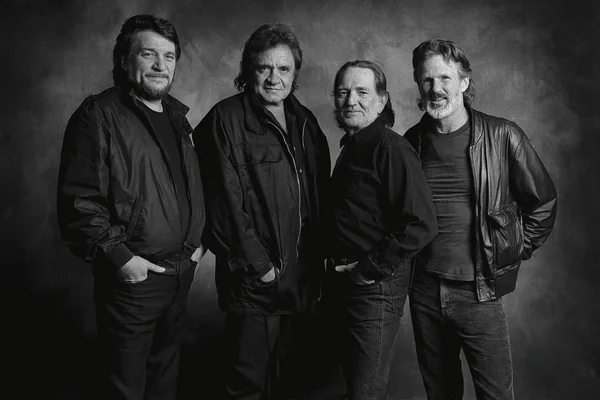
In the early 1980s he made duet albums with Colter (Leather and Lace, 1981) and with Nelson (WWII, 1982, and Take It to the Limit, 1983). In January 1983 he sang lead, with Bill Monroe on tenor, on “With Body and Soul” at Burns Station Sound in Tennessee, with Kenny Baker and Buddy Spicher on fiddles and Blake Williams on banjo, for Monroe’s Bill Monroe and Friends (MCA, 1984). In 1985 he joined Cash, Nelson and Kris Kristofferson as the Highwaymen, whose recording of Jimmy Webb’s “Highwayman” was a No. 1 that year; the four also made Highwayman 2 (1990) and The Road Goes On Forever (1995). With Cash alone he recorded Heroes (Columbia, 1986), and in 1985 he appeared in the film Follow That Bird.
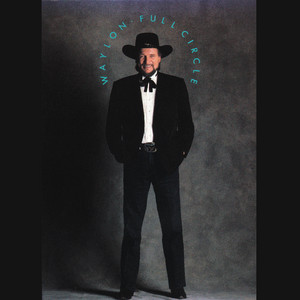
Leaving RCA, he signed with MCA, and Will the Wolf Survive (1986), co-produced with Jimmy Bowen, reached No. 1 on the country album chart; Hangin’ Tough (1987), with “Rose in Paradise,” A Man Called Hoss (1987) and Full Circle (1988) followed. On Epic he released The Eagle (1990), his last top-ten album, and Too Dumb for New York City, Too Ugly for L.A. (1992). Back on RCA, he made Waymore’s Blues (Part II) (1994) in Hollywood with the producer Don Was, and Right for the Time followed on Justice in 1996, the year he published an autobiography written with Lenny Kaye.
He stopped touring in 1997. In 1998 he formed the Old Dogs with Bobby Bare, Jerry Reed and Mel Tillis, who recorded a double album of Shel Silverstein’s songs, and in 1999 he put together the Waymore Blues Band, made up largely of former Waylors, which played select dates into 2001. A concert at the Ryman Auditorium on 5 and 6 January 2000, with guests including Colter, John Anderson and Travis Tritt, became the live album Never Say Die. Over his career he made some sixty albums and had sixteen No. 1 country singles. He was elected to the Country Music Hall of Fame in 2001 and died on 13 February 2002 at his home in Chandler, Arizona, at the age of 64. Songs he had recorded with the steel guitarist Robby Turner shortly before his death were completed by Turner and former Waylors and released in 2012 as Goin’ Down Rockin’.
- 1970: Grammy, Best Country Performance by a Duo or Group, “MacArthur Park” (with the Kimberlys)
- 1975: CMA Male Vocalist of the Year
- 1976: CMA Album of the Year (Wanted! The Outlaws), Single of the Year (“Good Hearted Woman”) and Duo of the Year (with Willie Nelson)
- 1979: Grammy, Best Country Vocal Performance by a Duo or Group, “Mammas Don’t Let Your Babies Grow Up to Be Cowboys” (with Willie Nelson)
- 1999: Texas Country Music Hall of Fame
- 2001: Country Music Hall of Fame
- 2007: Academy of Country Music Cliffie Stone Pioneer Award (posthumous)
These are the recordings in our catalog that credit Waylon Jennings. We add more all the time.