“Dark Hollow” was written by Wilmer “Bill” Browning, born in 1931 in Wayne, West Virginia, the son of a coal miner. Like many young West Virginians he had moved to Cleveland, Ohio, for work, and it was there that he and a restaurant owner, Frank J. Videmsek, set up Island Records in 1957. Browning cut “Dark Hollow” with his band, the Echo Valley Boys, and Island released it in March 1958 as the B-side of another of his songs, “Borned with the Blues” (Island IR-7). Billboard reviewed it on 17 March, calling it a “train weeper delivered in traditional style.” That spring Browning and the band joined the WWVA Jamboree in Wheeling, West Virginia.
The song is Browning’s, but its opening image is older. “I’d rather be in some dark hollow” is a line from the “East Virginia” family of mountain songs, collected by Cecil Sharp in 1917 and recorded as “East Virginia” by Buell Kazee (1927) and as “Dark Holler Blues” by Clarence Ashley (1929). Browning built a new song around it. His singer would rather be in a hollow where the sun never shines than in a small city room with her on his mind. He tells the freight train to blow its whistle and take him further down the track, because he is leaving today and is not coming back, and in the last verse being home alone, knowing she is gone, would cost him his mind.
Covers came quickly. Luke Gordon recorded it in Washington, D.C., in April 1958 for Don Owens’s Blue Ridge label, with Scotty Stoneman on fiddle and Donna Stoneman on mandolin. His record (Blue Ridge 502) reached Billboard’s country chart that December. Jimmie Skinner cut it in Nashville on 17 October 1958, with Curly Lunsford on electric mandolin. Mercury issued it as 71387 in November, and it went to No. 7 on the country chart early in 1959, staying ten weeks. Skinner recorded it again for Starday, which issued it on The Kentucky Colonel (1963) and as a single (Starday 7009).
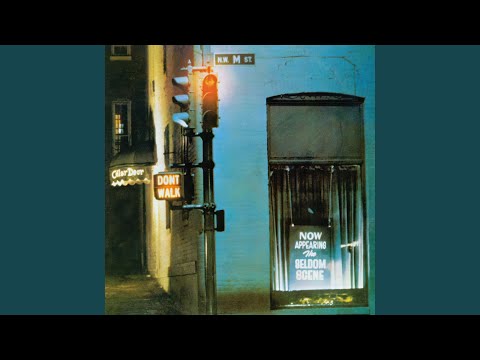
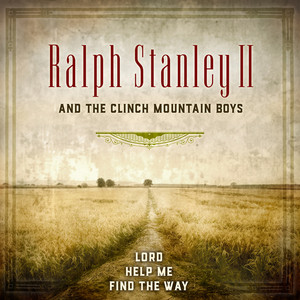
Bill Monroe and the Blue Grass Boys were singing it on stage by 1960; tapes survive from a show in Brunswick, Maryland, that August and from several concerts in 1963. J. D. Crowe and the Kentucky Mountain Boys recorded it in Lexington in December 1968, with Red Allen singing lead, Doyle Lawson tenor and Crowe baritone, for Bluegrass Holiday. In Nashville in July 1969 Ralph Stanley and the Clinch Mountain Boys cut it for Hills of Home, with Larry Sparks on lead and Stanley on tenor. The Grateful Dead played it in their acoustic sets in 1970. A version from the Fillmore East on 14 February 1970 appeared on History of the Grateful Dead, Volume One (Bear’s Choice) in July 1973, and another on the acoustic live album Reckoning (1981). Muleskinner recorded it for Warner Bros. in 1974, and the Seldom Scene included it on Live at the Cellar Door (Rebel, 1975).