“Duncan and Brady” (Roud 4177, Laws I9) is a murder ballad that grew out of a shooting in St. Louis, Missouri. On 6 October 1890 several police officers, among them James Brady, went to the Charles Starkes Saloon to deal with a fight. They tried to arrest patrons thought to have started it, a gunfight broke out, and Brady was shot. Harry Duncan, arrested for the killing, said that Starkes, the saloon’s owner, had fired the shot; Starkes denied it. Duncan was convicted, his appeals failed, and he was hanged on 27 July 1894. It was rumoured that Starkes later confessed on his deathbed.
In the song Duncan is the one behind the bar, Brady arrives with his shining star, and Duncan shoots him. Other verses describe the burial, with carriages and rubber-tired buggies carrying Brady to the graveyard, and the women of the town putting on red. Wilmer Watts and his Lonely Eagles recorded it for Paramount in Chicago in 1929 under the title “Been on the Job Too Long.” Their version reverses the roles: Brady is a worker on the telephone wire and the star is on Duncan’s chest. A correspondent of the folklorist Dorothy Scarborough placed the shooting in Waco, Texas, not St. Louis. The ballad also circulates as “Brady” and as “Twinkle, Twinkle, Little Star.”
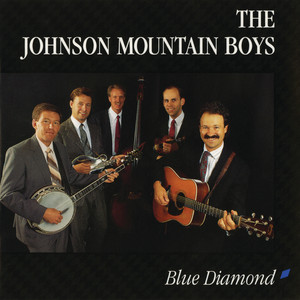
Lead Belly recorded it, both unaccompanied and with guitar, and Wikipedia calls his version the best known. Later versions include those of Dave Van Ronk, the New Riders of the Purple Sage and Bob Dylan. The Johnson Mountain Boys recorded it in 1993 at Big Mo Recording Studio in Kensington, Maryland, with Dudley Connell singing lead and David McLaughlin on harmony, Tom Adams on banjo, Eddie Stubbs on fiddle and Earl Yager on bass; Rounder issued it that year as a single and on the album Blue Diamond.