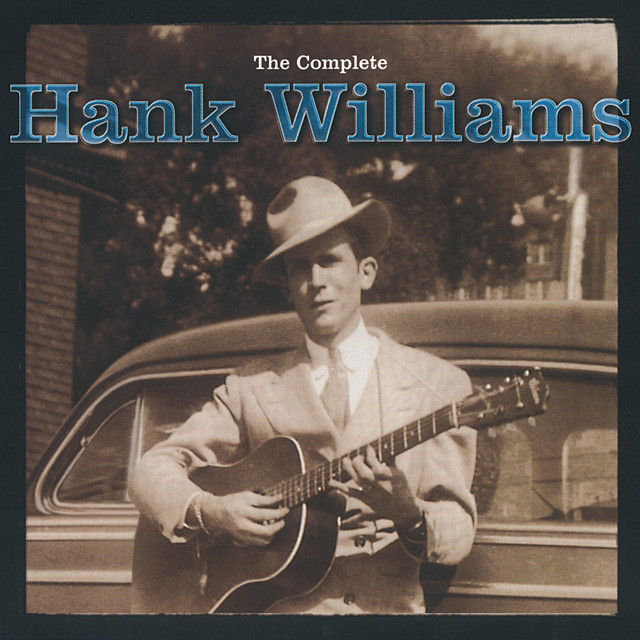
Hank Williams wrote and recorded “Jambalaya (On the Bayou),” and MGM released it in July 1952 (MGM K 11283), backed with “Window Shopping.” He cut it on 13 June 1952 at Castle Studio in the Tulane Hotel in Nashville, his first session in six months, with Jack Shook on acoustic guitar, Chet Atkins on electric guitar, Don Helms on steel guitar, Charles Wright on bass and Jerry Rivers on fiddle. The record spent fourteen non-consecutive weeks at number one on the country chart, and in 2002 the MGM recording was inducted into the Grammy Hall of Fame.
Williams is said to have begun the song while listening to Cajuns talk about food on the Hadacol Caravan bus. Its melody is based on the Cajun song “Grand Texas,” a lament about a woman who leaves with another man, though the words of “Jambalaya” are entirely different: the singer says goodbye, poles a pirogue down the bayou to a party at his sweetheart Yvonne’s, where kinfolk arrive by the dozen and the table holds jambalaya, crawfish pie and filé gumbo. Some accounts credit the pianist and singer Moon Mullican as a co-writer, with Williams as the sole credited author and Mullican receiving ongoing royalties, and it has been suggested that Williams’s publisher Fred Rose paid Mullican quietly so that the publishing would not have to be shared with Mullican’s label, King Records. Mullican recorded his own version for King in Hollywood on 9 July 1952, with the verses in a different order and extra rhyming couplets. Williams later wrote a reply from Yvonne’s side, “I’m Yvonne (Of the Bayou),” which Goldie Hill recorded; it was not as successful.
It is Williams’s most recorded song. Jo Stafford recorded it for Columbia on 20 July 1952 and reached number three on the pop chart, and Brenda Lee recorded it for Decca in 1956, at the age of eleven, as her first hit. Fats Domino reached number 30 on the pop chart with it in 1961, the Blue Ridge Rangers (John Fogerty) number 16 in 1973, and the Carpenters included it on their 1973 album Now & Then. After Williams’s record came out, Cajun musicians recorded it again on Cajun instruments with his words translated into Cajun French.