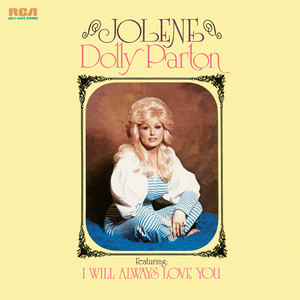
Dolly Parton wrote “Jolene” and recorded it on 22 May 1973 at RCA Victor’s Studio B in Nashville, with Bob Ferguson producing. Chip Young played the thumb-picked guitar figure that opens the record, and Wayne Moss added a second steel-string guitar part that enters on the second refrain. Parton has said she wrote it at about the same time as “I Will Always Love You,” though not necessarily on the same day.
She has given two sources for it. One was a young fan who came to the stage for an autograph, a girl with red hair, green eyes and fair skin who told her her name was Jolene; Parton, in a Norwegian television interview, said she told the girl she would write a song about her. The other was a red-haired bank teller who flirted with her husband, Carl Dean, at his local bank branch when the two were newly married. The song is written as a plea to a woman so beautiful that the singer cannot compete: her husband says Jolene’s name in his sleep, and she begs Jolene to leave him alone, since her happiness depends on what Jolene decides.
RCA Victor issued it as a single in late 1973, backed with “Love, You’re So Beautiful Tonight,” and it reached number one on the country chart in February 1974. It became the title song of Parton’s 1974 album. Parton herself has said it is her most frequently covered song. Rhonda Vincent recorded it at Lighthouse Sound Studio in Nashville for her 2000 Rounder album Back Home Again, with Bryan Sutton on guitar, Steve Sutton on banjo, Luke Bulla on fiddle and Darrin Vincent on bass. The Bluegrass Ramblers recorded it for an Orange Blossom LP in 1977, and Buck’s Stove and Range Company recorded it in Ripon, Wisconsin, for a 1979 LP.