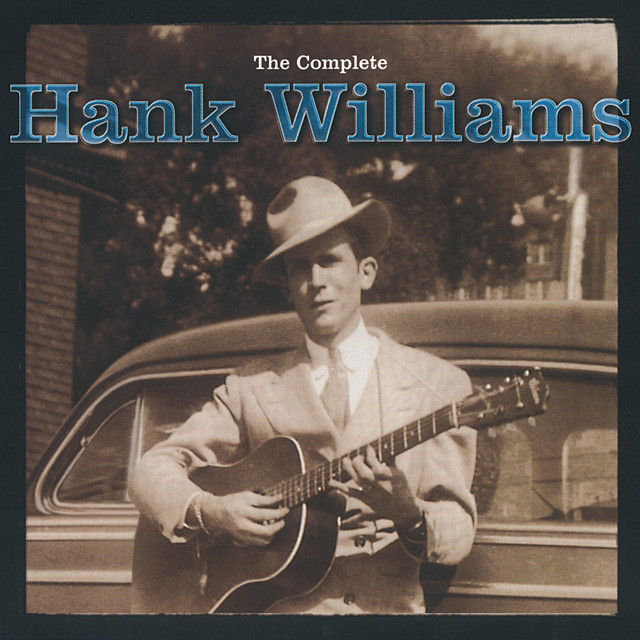
“Move It on Over” was recorded by Hank Williams on April 22, 1947, at WSM Radio Studio in Nashville — his first professional session after signing with MGM Records. Released in August 1947, it reached #4 on the Billboard country chart and became his first charting single. Williams was twenty-three years old. The song is built around a fast boogie shuffle: a man who comes home late and finds himself locked out tells his dog to “move it on over” and share the doghouse, cataloging his domestic transgressions with increasing comic specificity.
Music historians have examined the song’s rhythmic structure as a direct ancestor of rock and roll: the boogie-shuffle rhythm, the call-and-response vocal pattern, and the I–IV–V chord progression all anticipate the recordings that Bill Haley, Carl Perkins, and others would make a decade later. Williams was working in the honky-tonk idiom he had absorbed from Roy Acuff and others, but “Move It on Over” pushed that idiom toward a harder rhythmic edge that the next generation would take all the way.
A notable version is Williams’s 1947 MGM recording — the starting point of a career that produced more canonical American songs in the next five years than any other country writer before or since. The dog-in-the-doghouse conceit was so simple and so well-executed that it has survived as a permanent part of the folk repertoire, performed by musicians who have no particular investment in Williams but can’t resist a groove this clean.