“The Lucky One” was written by Robert Lee Castleman, who has said he wrote it in 1984 at David Smallridge’s guitar camp in Connecticut. A friend, Buck Brown, made a guitar-and-vocal demo of it, and around 2000, while Castleman was touring with Alison Krauss, Brown handed him a cassette of older songs. Castleman played it on the tour bus, and when “The Lucky One” came on, Krauss asked what it was. He had written it in the first person; she changed it to the second person and took no writing credit. Castleman, who started driving a long-haul truck in 1985, was in his truck when Krauss called to tell him the song had been nominated for a Grammy. He had already written “Forget About It,” the title song of an earlier Krauss album, and “Let Me Touch You for Awhile” is also his, on the same record as “The Lucky One.”
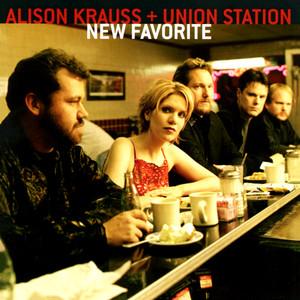
Alison Krauss & Union Station recorded it at Seventeen Grand Recording in Nashville for New Favorite, issued by Rounder on 14 August 2001. It was the album’s first single and the only one of its three singles to chart, reaching No. 46 on Billboard’s Hot Country Songs. At the 44th Grammy Awards on 27 February 2002 it won Best Country Song for Castleman and Best Country Performance by a Duo or Group with Vocal for the band, and New Favorite won Best Bluegrass Album the same night. Krauss sings lead and plays viola, Dan Tyminski plays guitar and mandolin, Ron Block lead guitar, Jerry Douglas dobro and lap steel, and Barry Bales bass; the band produced the record and Gary Paczosa recorded and mixed it. A version recorded at the Louisville Palace on 29 and 30 April 2002 appears on the band’s live album Live, released on 5 November 2002.
Castleman has described the song as being about a man with a positive outlook who sees the glass half full, has a checkered past and has been lucky. The verses address that man: free as the wind, loved by many and hated by none, a jack of all trades who laughs at the devil, and who wants nothing lasting. The singer counts himself fortunate in not knowing where he is headed, treating losing as nearly as good as winning, and ends by turning the luck back on the listener.