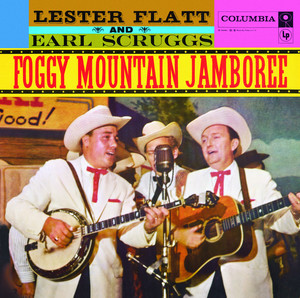
“Earl’s Breakdown” is Earl Scruggs’s self-named showcase for the three-finger banjo technique he developed through his teens and consolidated during his years with Bill Monroe’s Blue Grass Boys. Scruggs recorded it for Columbia Records in the early 1950s; it appeared on Foggy Mountain Jamboree (Columbia, 1957), the landmark LP that gathered Flatt & Scruggs’s best instrumental recordings into a single album and became one of the most influential documents in the instrumental bluegrass canon. The title is the simplest possible declaration: a breakdown written by and for Earl Scruggs.
The G-major structure is built to showcase forward rolls, melodic runs in the upper positions, and the rhythmic drive Scruggs could sustain for a full break without the momentum ever flagging. Unlike “Flint Hill Special,” which is named for a place and has a more lyric arc, “Earl’s Breakdown” is pure velocity — a tune that works as a temperature check on a picker’s right-hand speed and left-hand clarity in equal measure. It became a standard evaluation piece for developing banjo players and a regular set-closer for working bands wanting a hard finish.
The original Flatt & Scruggs and the Foggy Mountain Boys recording from Foggy Mountain Jamboree is a notable version. The album’s combination of Monroe’s influence, Scruggs’s technical innovations, and Lester Flatt’s steady guitar chop defines what classic Flatt & Scruggs sounds like, and “Earl’s Breakdown” is among the purest expressions of that sound.