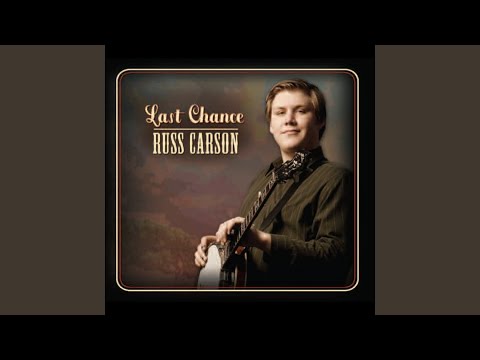
“Last Chance” is a banjo tune that reached the folk revival through Hobart Smith (1897–1965) of Saltville, Virginia. Smith did not claim it as his own. “I got this piece from my uncle, my mother’s brother,” he said, “and he called it the ‘Last Chance’.” The annotator George Armstrong added that the southwest Virginia banjo player Dock Boggs knew the same tune as “Davenport.”
Smith played it in a tuning of its own, given in the notes as FDFCD. He had no names for most of his tunings other than the tunes that used them, so this one was simply the “Last Chance” tuning. The Chicago banjo teacher Fleming Brown, of the Old Town School of Folk Music, spent several days taping Smith. He tablatured the tune, calling it “one of the most charming of his tunes, although not, by far, the most intricate.” Brown noted that Smith played it without the double-thumbing he used on most pieces, and seldom brushed across the strings, picking individual notes instead. He also found the tune’s length irregular, “most strange, but that’s the way it is.”
The recording that carried it to other players was made in October 1963 by Norm Pellegrini, program director of Chicago’s WFMT, in the station’s studios during Smith’s fall concert tour. Folk-Legacy issued it in 1964 on Hobart Smith of Saltville, Virginia (FSA-17), Smith’s first solo album, where “Last Chance” is one of five tunes in a banjo medley. Topic reissued the album in Britain in 1969 as The Old Timey Rap. Later, Rounder’s Hobart Smith: Blue Ridge Legacy, in its Alan Lomax Collection, printed banjo tablature for the tune by Steven Wade.
Fiddlers have taken it up as well. The Fiddler’s Companion describes a fiddle adaptation in G Dorian, played in standard tuning or cross-tuned EDae, and a notated version appears in Spandaro’s 10 Cents a Dance (1980).