Jerry Reed
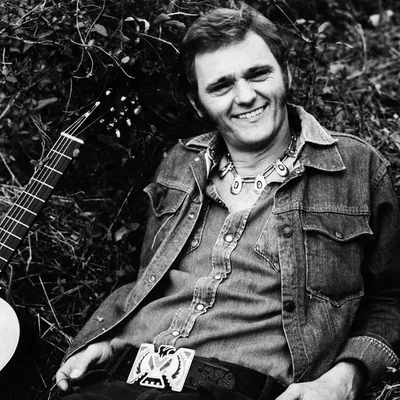
Jerry Reed (1937–2008) was a guitarist, singer, songwriter and actor from Atlanta whose syncopated fingerpicking, known as the “claw” style for the shape of his right hand, is still widely emulated. Elvis Presley recorded his “Guitar Man” and “U.S. Male” with Reed on lead guitar, his own records “Amos Moses” and “When You’re Hot, You’re Hot” crossed over to the pop charts, and he co-starred with Burt Reynolds in the Smokey and the Bandit films. He won three Grammys, two of them for guitar duet albums with Chet Atkins, and was inducted into the Country Music Hall of Fame in 2017.
He was born Jerry Reed Hubbard in Atlanta on 20 March 1937 and began playing guitar at seven; his mother taught him a few chords, and he learned the rest from the records of guitarists such as Merle Travis and Chet Atkins. By his early teens he had appeared on shows with Faron Young and Ernest Tubb. On the recommendation of the Atlanta publisher and producer Bill Lowery, Capitol Records producer Ken Nelson signed him, and Reed cut his first Capitol sides in 1955. Between 1955 and 1958 he recorded about thirty songs for the label, rockabilly and country, among them “Mister Whiz,” “Here I Am” and “If the Good Lord’s Willin’ and the Creeks Don’t Rise,” and dropped Hubbard from his professional name. None sold well, but Lowery encouraged his songwriting, and his Capitol labelmate Gene Vincent recorded Reed’s “Crazy Legs.”
In 1958 Reed moved to Lowery’s National Recording Corporation in Atlanta, recording “Soldier’s Joy” among six songs and working in the label’s staff band with Joe South and Ray Stevens. He enlisted in the Army in 1959 and played guitar in an Army band, the Circle A Wranglers. His songwriting kept going while he served: Brenda Lee’s recording of his “That’s All You Gotta Do,” the flip side of “I’m Sorry,” became a Top Ten pop hit in 1960, and Porter Wagoner took his “Misery Loves Company” to No. 1 on the country chart in 1962.
After his discharge Reed settled in Nashville in the early 1960s. Recording for Columbia, he had two minor pop hits in 1962, “Goodnight Irene” and “Hully Gully Guitar,” and he found steady work as a session guitarist, playing on records by Bobby Bare, Waylon Jennings and Willie Nelson. When he sent his song “Scarecrow” to Chet Atkins at RCA Victor, Atkins recorded it himself and then signed Reed to the label, and as his producer Atkins told him simply to be himself in the studio. Reed’s first RCA album, The Unbelievable Guitar and Voice of Jerry Reed, came out in 1967, and his single of “Guitar Man” reached No. 53 that July; the follow-up, “Tupelo Mississippi Flash,” recorded on 1 September 1967, was his first Top 20 country hit.
Nine days later Presley came to Nashville to record and wanted “Guitar Man” to sound like Reed’s record. His producer, Felton Jarvis, brought Reed in, since the session players were flatpickers and Reed fingerpicked in his own tunings; Reed played lead guitar on Presley’s “Guitar Man” and “Big Boss Man.” At a second Presley session, on 15 and 16 January 1968, he played on “U.S. Male,” another of his songs, along with “Too Much Monkey Business.” Presley later recorded two more Reed songs, “A Thing Called Love” in 1971 and “Talk About the Good Times” in 1973, and Johnny Cash took “A Thing Called Love” to No. 2 on the country chart as a single in 1971.
His own records peaked in the early 1970s. “Amos Moses” (1970), a mix of rock, country, funk and Cajun music, reached No. 8 on the pop chart, and Me & Jerry, a duet album with Atkins, won the Grammy for Best Country Instrumental Performance. From 1970 he was a regular on CBS’s The Glen Campbell Goodtime Hour, and in 1972 he hosted its summer replacement, The Jerry Reed When You’re Hot, You’re Hot Hour. “When You’re Hot, You’re Hot” (1971), a story song mostly spoken rather than sung, topped the country chart, reached No. 9 on the pop chart and won the Grammy for Best Country Vocal Performance, Male; it and “Amos Moses” each sold more than a million copies. The Country Music Association named him Instrumentalist of the Year in 1970 and 1971. A second duet album with Atkins, Me & Chet, followed in 1972, and “Lord, Mr. Ford” gave him another No. 1 in 1973.
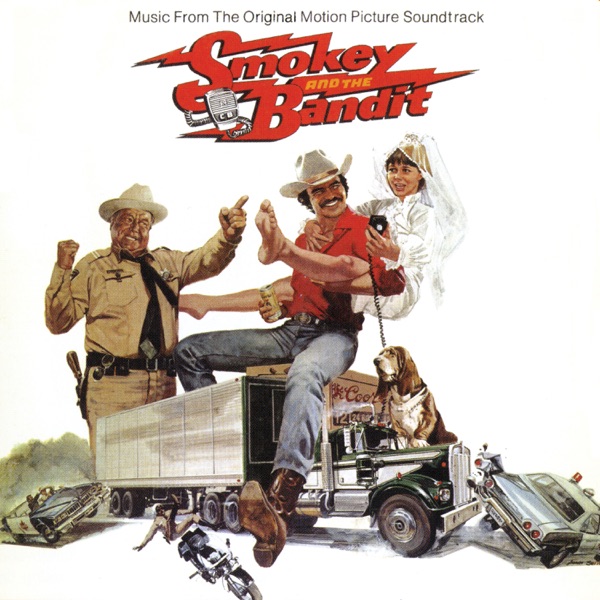
Television led to film. Reed played a wisecracking country boy opposite Burt Reynolds in W.W. and the Dixie Dancekings (1975), and appeared with him in Gator (1976) and Smokey and the Bandit (1977); his theme song for that film, “East Bound and Down,” reached No. 2 on the country chart. He co-starred in the CBS police series Nashville 99, which was canceled after four episodes in 1977, and went on to High-Ballin’ (1978), Hot Stuff (1979), the TV movie Concrete Cowboys (1979), which became a short CBS series in 1981, Smokey and the Bandit II (1980), Smokey and the Bandit III (1983) and Survivors (1983). As his film career grew his records slowed: after “Lord, Mr. Ford” his Top Ten hits were “East Bound and Down” and “(I Love You) What Can I Say” (1978), until the 1982 novelty records “She Got the Goldmine (I Got the Shaft),” a No. 1, and “The Bird.” In 1983 he and Waylon Jennings had a hit with a remake of Sam and Dave’s “Hold On, I’m Comin’,” and by 1984 he had left RCA.
Reed then recorded My Best to You (1984) on his own label and two albums for Capitol, Lookin’ at You (1984) and What Comes Around (1985). He produced, directed and starred in the 1985 film What Comes Around, and in 1988 co-produced, acted in and wrote songs for the Vietnam film BAT 21, with Gene Hackman. A third duet album with Atkins, Sneakin’ Around (Columbia, 1992), won the Grammy for Best Country Instrumental Performance in 1993. He returned to Lowery for two albums on the Southern Tracks label, Flyin’ High (1995) and Pickin’ (1998), and in 1998 joined Bobby Bare, Waylon Jennings and Mel Tillis in the Old Dogs, whose album for Atlantic was made up of songs by Shel Silverstein. That year he also played the football coach Red Beaulieu in Adam Sandler’s The Waterboy, his last film role. On his own R2K label he released albums from Jerry Reed Visits Hit Row (1999) and Forever Chet (2000) to Christmas at the Mall (2007), and he kept touring and appearing on television into the 2000s.
Reed was elected to the Nashville Songwriters Hall of Fame in 2005. He died in Nashville on 1 September 2008, aged 71. Chet Atkins had given him, with Tommy Emmanuel, Steve Wariner and John Knowles, the honorary title CGP, “Certified Guitar Player.” His playing, with independent lines in the bass and treble and rippling mixes of fretted and open strings, influenced singer-guitarists such as Steve Wariner, studio players such as Brent Mason, and Atkins himself, who recorded several of Reed’s songs; his instrumental “The Claw” remains a piece many guitarists set out to master. The Country Music Hall of Fame announced his election in April 2017, and Bobby Bare inducted him that October. He is also a member of the Musicians Hall of Fame.
- 1970: Country Music Association Instrumentalist of the Year
- 1971: Country Music Association Instrumentalist of the Year
- 1971: Grammy, Best Country Instrumental Performance, Me & Jerry (with Chet Atkins)
- 1972: Grammy, Best Country Vocal Performance, Male, “When You’re Hot, You’re Hot”
- 1993: Grammy, Best Country Instrumental Performance, Sneakin’ Around (with Chet Atkins)
- 2005: Nashville Songwriters Hall of Fame
- 2017: Country Music Hall of Fame
These are the recordings in our catalog that credit Jerry Reed. We add more all the time.