“Red Wing” was published in 1907, with music by Kerry Mills and words by Thurland Chattaway. Mills also wrote “At a Georgia Camp Meeting” and “Whistlin’ Rufus.” The song was subtitled “An Indian Fable” or “An Indian Intermezzo,” and it belonged to a craze for Native American subjects that ran through American popular song in the first decade of the century. Chattaway’s chorus has the maiden Red Wing weeping in the moonlight for her brave, who lies far away beneath his star. Frank C. Stanley and Henry Burr recorded it as a duet with orchestra for Columbia in New York on 31 August 1907, and the Haydn Quartet cut it for Victor in Camden the following January.
As a tune it spread widely among dance musicians. It was a staple at old-time dances in northern Wisconsin and was played across New England and among Franco-American musicians in Quebec; in East Anglia it served as a polka, and in Australia old-time dance players used it for almost any dance, even the waltz. Western square-dance callers set singing calls to it. Several writers have noted that the first part resembles Robert Schumann’s piano piece “The Happy Farmer” (Op. 68, No. 10). Woody Guthrie took the opening of Chattaway’s verse, about an Indian maid, and turned it into “Union Maid.”
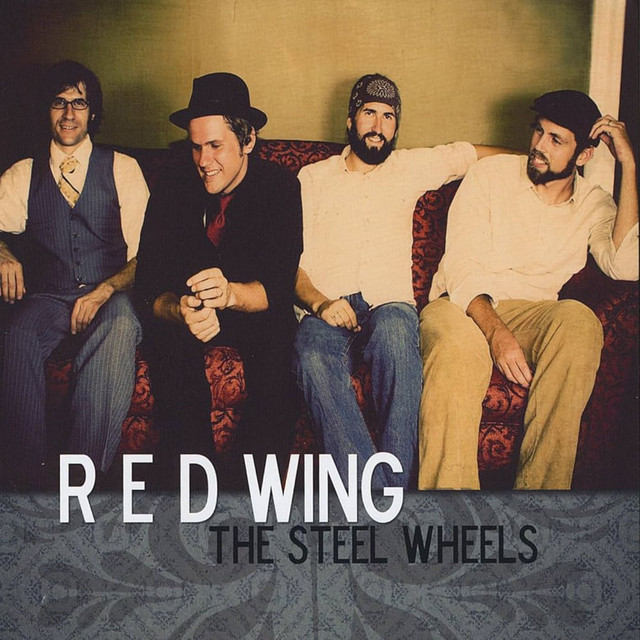
A century later the Steel Wheels gave the tune a new set of words. Trent Wagler, the band’s main songwriter, was born in Bean Blossom, Indiana; his Amish grandfather played harmonica and had formed a string band on the sly, and Wagler spent time in his twenties listening to him play old tunes. Whenever Wagler had heard “Red Wing” on family visits to Bean Blossom it was an upbeat reel, but he heard it as a slow, melancholy song and wrote his own lyrics. The band recorded it in a cabin in Virginia’s Shenandoah Valley with the folk duo Robin and Linda Williams, and it became the title track of their 2010 album Red Wing; the band’s Red Wing Roots Music Festival, begun in 2013 near Mount Solon, Virginia, takes the same name.
In Wagler’s song the red wing is a bird, and the singer asks her to carry him gently home to his family. He remembers a long, dusty summer day in 1981 when he heard her song on the wind, and says she has no money and that no aircraft or engine of war ever won her. At the end he imagines the two of them passing heaven’s gates together on her wings.