“The Two Soldiers,” also known as “The Last Fierce Charge,” began as a poem called “At Fredericksburg,” printed over the initials “L.C.M.” in Harper’s Weekly on February 7, 1863. It was set at the Union assault on the Confederate heights at Fredericksburg, Virginia, on December 13, 1862. A historian for the National Park Service at Fredericksburg has argued that the poet was Louise Chandler Moulton, though the authorship is not settled.
Two soldiers rein in before the charge. The tall dark man asks the blue-eyed boy, Charlie, to carry a picture of the woman he is to marry back to her if he is killed; the boy agrees, and asks in turn that someone write tenderly to his mother. Then the order comes, they ride up the hill into the fire, and both are among the dead, so neither message is ever sent. By the mid-1880s the poem was being sung in Missouri. George Malcolm Laws later found it reported in Arkansas, Georgia, Kentucky, North Carolina, Ohio, Texas, Utah and Nova Scotia, under titles such as “The Two Soldiers,” “The Last Fierce Charge” and “The Battle of Gettysburg.” Carl T. Sprague recorded “The Two Soldiers” for Victor in Savannah, Georgia, on August 24, 1927.
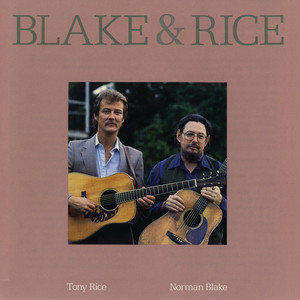
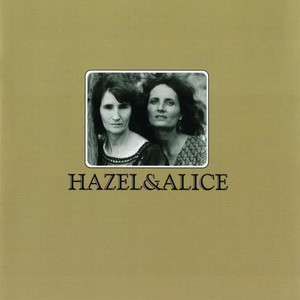
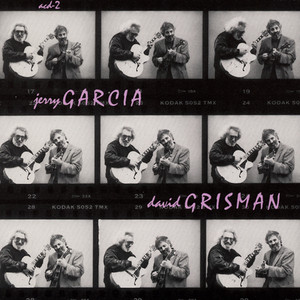
In 1937 Alan and Elizabeth Lomax recorded Munroe Gevedon of West Liberty, Kentucky, singing it and playing fiddle, with his children Cathlyn and Bert on guitar and banjo. The Library of Congress holds the recording as two parts on two tapes, and it was long taken for granted that the second tape, which opens at “It was just a blue-eyed Boston boy,” was the whole song. Mike Seeger learned that half from a copy and recorded it for Vanguard in 1964, and it was Seeger’s shortened form that Alice Gerrard and Hazel Dickens (Hazel & Alice, Rounder, 1973), Jerry Garcia and Bob Dylan sang. Garcia and David Grisman recorded it at Dawg Studios in Mill Valley, California, for Jerry Garcia & David Grisman (Acoustic Disc, 1991). Dylan, who learned it from Garcia, included it on World Gone Wrong (Columbia, 1993), and Norman Blake and Tony Rice recorded it on Norman Blake and Tony Rice 2 (Rounder, 1990).
Assisted by AI.
Spot something off? Help us fix it.