“Cluck Old Hen” is both a fiddle and banjo tune and a song made of loose, playful verses, and it was widely known across the South and the Midwest. Its versions vary so much that, as Mike Yates observed, sometimes the only thing they share besides the title is a squawk imitating the hen. On the fiddle that squawk is usually a note plucked with the left hand, often the open E string. The tune is modal rather than minor: transcriptions set it in A Dorian or A Mixolydian, with some players pitching it in G, and fiddlers play it in standard tuning or cross-tuned. Tommy Jarrell of Mount Airy, North Carolina, placed it in the “old-timey tuning of A,” A-E-A-E, which is also called the sawmill key. The Library of Congress notes to Henry Reed’s recordings point out that it is quite distinct from another barnyard tune, “Cackling Hen,” which is played in G.
The verses float from singer to singer. A common pair runs “Cluck old hen, cluck and squall, / Ain’t laid an egg since late last fall,” and another hen “lays eggs for the railroad men.” Yates found the earliest text in the article “South Texas Negro Work-Songs,” dated 1886 and printed in the collection Rainbow in the Morning in 1926.
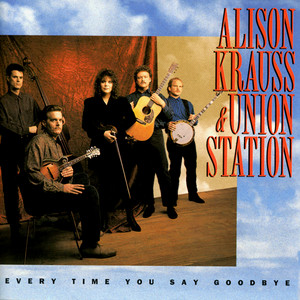
Fiddlin’ Cowan Powers of Russell County, Virginia, recorded it for Edison in 1925, and he is said to have been playing it on stage with the Stanley Brothers in Saltville, Virginia, when he suffered a fatal heart attack in the early 1950s. The Hill Billies recorded it in New York on 13 May 1927, with Tony Alderman and Charlie Bowman on fiddles and Jack Reedy on banjo. Vocalion issued it under the band’s name and Brunswick as by Al Hopkins and his Buckle Busters. The Virginia fiddler G. B. Grayson recorded it with Henry Whitter for Gennett, and it came out on Gennett 6656 in 1928. Alan Jabbour recorded Henry Reed of Glen Lyn, Virginia, playing it for the Library of Congress in November 1966 and May 1967, and in the later performance Reed plucked the open E string for the cluck. Alison Krauss & Union Station recorded it as an instrumental for Every Time You Say Goodbye (Rounder, 1992), with Krauss on fiddle, Ron Block on banjo, Adam Steffey on mandolin, Tim Stafford on guitar and Barry Bales on bass.