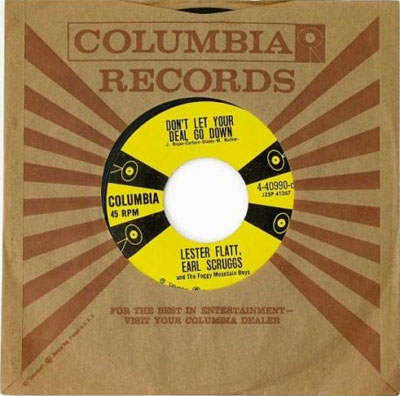
“Don’t Let Your Deal Go Down” is a traditional song with mixed Black and white Southern roots, brought into the commercial-recording era most consequentially by Charlie Poole and the North Carolina Ramblers, who cut it in New York on July 27, 1925 for Columbia. The record sold over 106,000 copies in a market with perhaps 6,000 phonographs in the South — an extraordinary success that helped open the country-record era.
According to Kinney Rorrer’s biography Rambling Blues: The Life and Songs of Charlie Poole, another North Carolina musician learned the song from a local Black guitarist around 1911 and taught the words to Poole, who already knew the tune. That sequence of transmission — Black source, white intermediary, Poole’s commercial success — is typical of the broader pattern by which 1920s country-record commerce drew on African-American oral tradition without crediting it.
The piece survives in two main bluegrass forms: a major-key version, which is the form Lester Flatt and Earl Scruggs cut as a 1957 Mercury single, and a minor-modal form often attributed to the Charlie Poole reading itself. The Flatt & Scruggs major-key arrangement is the one most contemporary bluegrass jammers default to; the older minor reading remains common in old-time circles. The lyric’s gambling-and-loss conceit makes it a steady candidate for both moods.