
Musicians
- G.B. Grayson — Lead Vocals, Fiddle
- Henry Whitter — Guitar
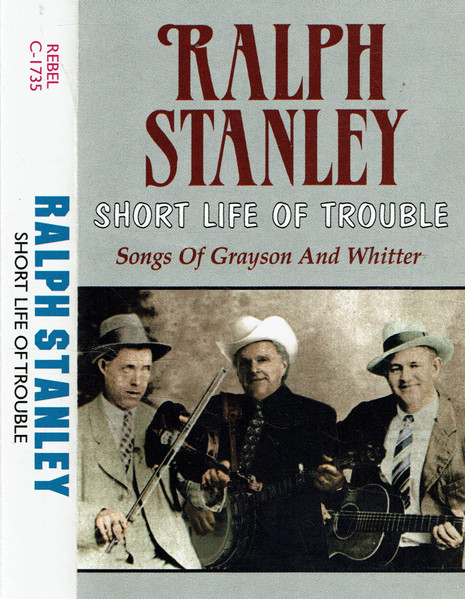
Source Recording: Ralph Stanley (1996)
“I’ve Always Been a Rambler” is a traditional ballad whose original source is unknown but whose versions circulated widely during the 19th century across both the British Isles and America. The most commonly repeated account holds that the song spread by broadside and newspaper as much as by oral tradition, accumulating local variants along the way. It is sometimes carried under the alternate title “The Girl I Left Behind,” though it should not be confused with the Civil War–era fiddle tune of similar name. The text follows a wandering protagonist — in most readings a drunken, gambling rambler — who courts and then abandons a devoted woman before drifting on.
The version that anchored the song in the recorded old-time tradition came from the North Carolina–Virginia duo G.B. Grayson and Henry Whitter, who cut it for Victor in 1928; it later circulated on a 1930 release and has since been reissued on collections of regional stringband recordings. Grayson, a blind fiddler and singer, is generally credited as the source for this rendition, which is notable for compressing the rambler’s travels into the shortest geographic range of any collected variant — roughly a hundred miles from North Carolina through Marion, Virginia, to Johnson City, Tennessee. The tune sits in a Mixolydian mode, pairing major chords a step apart in a way that reflects older modal practice rather than standard major–minor harmony.
What distinguishes the song from the usual unrequited-love ballad is its refusal of redemption: on learning that the woman he left has married another, the narrator responds not with reform but with defiant continuation of his wandering and vices. The piece has been carried forward by old-time and bluegrass interpreters including Dry Branch Fire Squad, Mac Martin, and Albert Hash, and more recently by Molly Tuttle, keeping it in steady, if quiet, circulation within the traditional repertoire.
Loading lyrics…
Loading chord chart…