
“The Golden Vanity” is an English ballad, number 286 in Francis James Child’s collection and number 122 in the Roud Folk Song Index. It is also known as “The Sweet Trinity,” “The Golden Willow Tree” and “The Turkish Revelry.” The first surviving version dates from 1635: a broadside titled “Sir Walter Raleigh Sailing in the Lowlands,” which told how the ship called the Sweet Trinity was taken by a false galley and won back by the craft of a little sea-boy who sank the galley.
The story varies from singer to singer. A captain’s ship is threatened by another vessel, which different versions make French, Turkish, Spanish or, especially in American variants, British. A cabin boy offers to deal with it, and the captain promises rich rewards that often include land and the hand of his daughter. The boy swims to the enemy ship, bores holes in its hull with an auger and sinks it. Back at his own ship, the captain usually refuses to haul him out of the water, let alone reward him, and the boy usually drowns. In a few variants the boy sinks or threatens to sink his own ship as well. In the version Aoife O’Donovan sings with Crooked Still, the enemy is the Turkish Revelry, the reward is five thousand pounds and the captain’s daughter, and the captain answers the boy’s cries by threatening to shoot him and drown him.
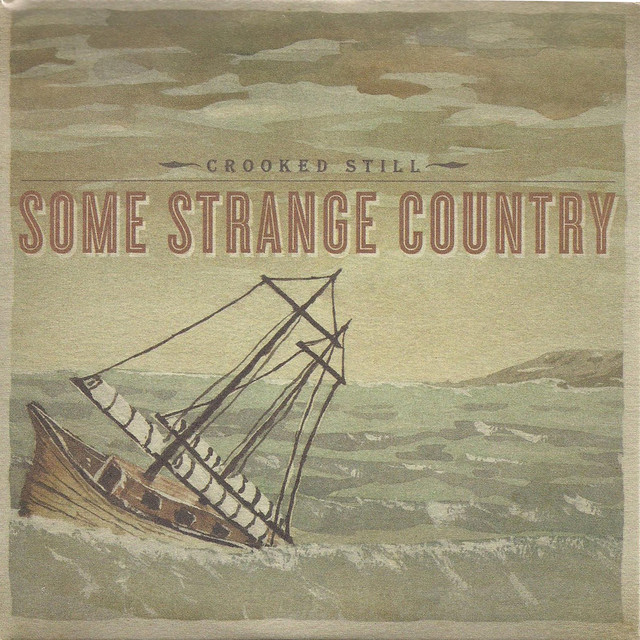
Alan Lomax recorded Justus Begley singing “The Golden Willow Tree” in 1937. The Carter Family recorded it in 1935 as “Sinking in the Lonesome Sea,” and the New Lost City Ramblers used that title for their recording on Gone to the Country (Folkways, 1963), after the Carters’ version; June Carter Cash included a version under the same title on Wildwood Flower (2003). Jody Stecher recorded it as “Golden Vanity” in 1977 for Going Up on the Mountain, with John Herald, Fred Sokolow, Hank Bradley and Larry Hanks. Mike Seeger recorded a banjo version as “The Golden Willow Tree” on True Vine (2003), Bruce Molsky a clawhammer version on Soon Be Time (2006), and Crooked Still included it on Some Strange Country, released on Signature Sounds on 18 May 2010.
Composers have borrowed it too: Aaron Copland included it in his Old American Songs, and Benjamin Britten set it in 1966 for boys’ voices and piano as his Opus 78.





