Several unrelated fiddle tunes carry the title “Cold Frosty Morning,” and the one played in A Dorian is Henry Reed’s “Frosty Morning.” Reed (1884–1968) was born in Monroe County, West Virginia, and lived at Glen Lyn in Giles County, Virginia. There the folklorist Alan Jabbour recorded him playing it in August and November 1966, and those recordings are now in the Library of Congress. Jabbour wrote that it “sounds like a classic fiddle tune of the old frontier,” yet he could find no clear variants of it elsewhere. The title turned up in other places, sometimes as “Cold Frosty Morning,” but never for this melody. Both times, Reed began with the high strain, and he tended to slide into strains of other tunes, once into “Betsy” and once into “West Virginia Gals,” which he had just played. After one performance he remarked, “It’s got a lonesome sort of sound.”
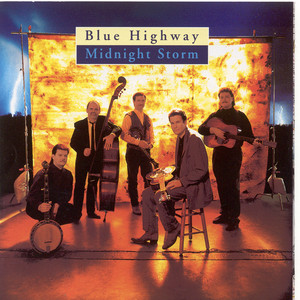
Through Jabbour, Reed’s repertoire reached younger players in the old-time revival. The Fuzzy Mountain String Band learned “Frosty Morning” from Reed by way of Jabbour and put it on their 1972 album for Rounder, and Jabbour himself recorded it with Reed’s son James and Bertram Levy on A Henry Reed Reunion (2002). As it spread, the longer title “Cold Frosty Morning” attached itself to Reed’s tune, a usage The Fiddler’s Companion calls mistaken. In bluegrass, Blue Highway recorded it as “Cold Frosty Morn” on Midnight Storm (Rebel, 1998), as a duet for Shawn Lane’s fiddle and Jason Burleson’s banjo.
The other tunes of that name are different pieces. Melvin Wine of Braxton County, West Virginia, played an A-major “Cold Frosty Morning” and made it the title track of a 1976 LP. Stephen B. Tucker of Lauderdale County, Mississippi, recorded for the Library of Congress by Herbert Halpert in 1939, played a “Cold Frosty Morning” that is a quadrille in 6/8 time in D. “A Cold Frosty Morning” in the Gows’ Complete Repository (1802) is a Scottish slow air in F.