“Miss McLeod’s Reel” is a Scottish reel that became a favourite on both sides of the Atlantic. It first appears in print in Gow’s Fifth Collection of Strathspey Reels of 1809, headed “An original Isle of Skye Reel. Communicated by Mr. McLeod (of Raasay).” The Miss McLeod of the title may have been one or both of MacLeod of Raasay’s sisters. The tune was already travelling by then. A foreign visitor to Connacht named Beranger heard it played in 1779 at a “cake” dance, where a cake was the prize, and Francis O’Neill’s later account lists it among six tunes the Galway pipers played for him. Most settings are in G major, with two parts each played twice. In the British Isles the parts usually end on the second note of the scale, so that the tune circles back on itself. American fiddlers generally resolve it on the tonic.
In the United States it was in print by 1826, in William Williams’s New and Compleat Preceptor for the Fife, published in Utica, New York. A 1909 Alabama newspaper recalled it being played at a housewarming in Perry County in 1827. Later collectors met it in many regions. Central New York fiddlers sometimes called it “Virginia Reel,” an Arizona fiddler remembered it around Flagstaff in 1903, and the Tennessee fiddler Uncle Jimmy Thompson played it as “McLeod’s Reel.” Vance Randolph recorded Ozark fiddlers playing it for the Library of Congress in the early 1940s as “Mistress McCloud’s Jig.” Along the way it picked up words, especially in American versions, and new names: “Hop High Ladies,” “Hop Light Ladies,” “The Cake’s All Dough” and “Did You Ever See the Devil, Uncle Joe.” Thomas Hardy gave it a scene in The Mayor of Casterbridge (1886), where Farfrae dances to “Miss McLeod of Ayr.”
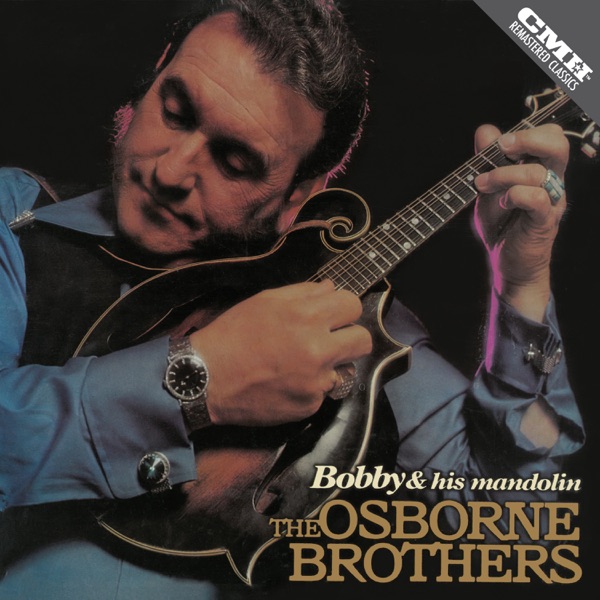
One of the earliest recordings was made in 1899 by the New York uilleann piper James C. McAuliffe, on an Edison cylinder titled “Mrs. McCloud’s Reel.” In 1926 Maine fiddler Mellie Dunham, then Henry Ford’s champion fiddler, recorded it as the first tune of a “Medley of Reels” on Victor 20537. That same year John McDermott of New York State opened a “Virginia Reel Medley” with it for Brunswick. Doc Watson played it as “Hop High Ladies, the Cake’s All Dough” at Club 47 in Cambridge, Massachusetts, on 10 February 1963. In 1981 Bobby Osborne took it up on mandolin for his CMH album Bobby Osborne & His Mandolin, cut at Cumberland Sound in Nashville with Kenny Baker on fiddle, Robby Osborne on guitar, Wynn Osborne on banjo and Jimmy D. Brock on bass.