
Curtis McPeake
Curtis McPeake was a Tennessee banjo player who filled in for Earl Scruggs with Lester Flatt from 1956 into the late 1960s, recorded with Bill Monroe’s Blue Grass Boys in 1960–62, and became the first staff banjo player at WSM in Nashville before eighteen years with Danny Davis and the Nashville Brass. He invented a ten-string banjo, was an authority on pre-war Gibson banjos, and received the IBMA’s Distinguished Achievement Award in 2018.
William Curtis McPeake was born on 9 October 1927 in Scotts Hill, in western Tennessee, midway between Nashville and Memphis. His father played old-style banjo and fiddle, and from about the age of nine Curtis backed him on guitar for family and neighbors. He started his own career at fourteen on WTJS in Jackson, Tennessee, playing steel guitar and mandolin, and in 1945 he took over the band and renamed it Curtis McPeake and the Rocky Valley Boys, working on the radio six days a week. He took up the banjo at eighteen after hearing Scruggs, with Rudy Lyle as another early model, and turned the band to bluegrass, broadcasting weekly on WXDL in Lexington, Tennessee, with an Arkansas flour company as sponsor.
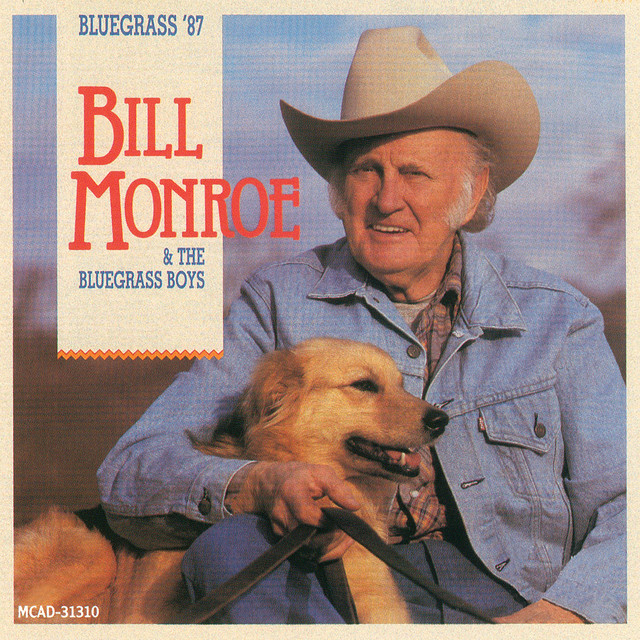
Early in 1956 Lester Flatt hired him to play banjo while Scruggs recovered from an automobile accident of October 1955, and he filled in again at other times through 1968, which brought him live television work in Georgia, South Carolina, West Virginia and Tennessee. He worked for Bill Monroe in 1960 and 1961 and again in 1962, and played on five Decca sessions, beginning on 30 November 1960: eighteen recordings in all, among them the album Mr. Blue Grass, with “Time Changes Everything,” “Lonesome Road Blues,” “Little Joe” and “Big River,” and half of Bluegrass Ramble, with “Little Maggie,” “Nine Pound Hammer,” “Shady Grove” and “Live and Let Live.” On 29 November 1961 he was part of the Grand Ole Opry package show at Carnegie Hall in New York, where his “Cripple Creek” earned an encore.
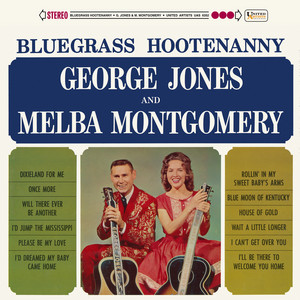
After leaving Monroe he became WSM’s first staff banjo player and, apart from a short time with Wilma Lee and Stoney Cooper, stayed there until 1969, while working as a Nashville session player on records, jingles and commercials. On Bluegrass Hootenanny, recorded by George Jones and Melba Montgomery in January 1964, he played banjo, with “I’d Jump the Mississippi” and his own “Dixieland for Me” among the tracks, and he also recorded with the McCormick Brothers, Chubby Wise, Wayne Raney, Hylo Brown, Curly Fox and Texas Ruby, the Willis Brothers and others. He made banjo records in groups such as the Tennessee River Boys, with Benny Williams; the Bluegrass Hillbillies, with Billy Grammer, Ray Edenton, Tommy Hill and Junior Huskey; and the Nashville Pickers, with Josh Graves and Benny Martin. In 1966 he invented a ten-string banjo, strung in five pairs like a twelve-string guitar, which sounds like two banjos playing at once.
From 1969 he played banjo with Danny Davis and the Nashville Brass for eighteen years, on television and on tours around the world. Under his own name he recorded “Cahulawassee Rapids” (Gusto, 1973) and The Dueling Banjos (1973), later reissued as Curtis McPeake Plays Dueling Banjos & Other Bluegrass Favorites. His interest in old instruments went back to his time with Monroe, and he founded McPeake’s Unique Instruments in east Nashville, moving it to Mt. Juliet, Tennessee, in 1977. When he left Davis in 1987 he took over a band called Natchez Grass, later renamed the Natchez Express, and played festivals and local dates with it.
He stayed active into his nineties. He recorded The View from McPeake (Swift River Music, 2001) and, with the guitarist and singer Andy May, The Good Things Outweigh the Bad (Swift River Music, 2018), and the two played at the Country Music Hall of Fame in July 2018. He received the Uncle Dave Macon Days Trailblazer Award in 2010 and the IBMA Distinguished Achievement Award in 2018. Curtis McPeake died at his home in Mt. Juliet on 19 February 2021, at the age of 93.
These are the recordings in our catalog that credit Curtis McPeake. We add more all the time.
-
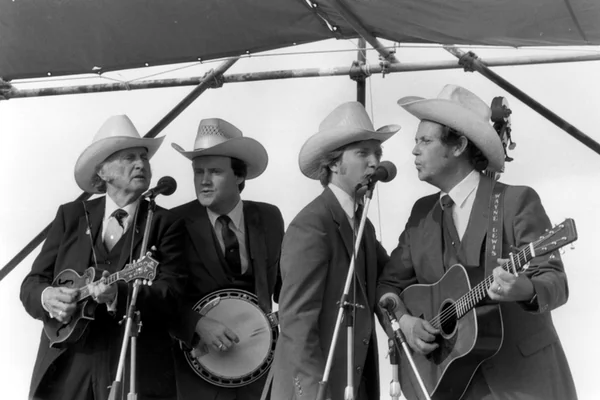 Bill Monroe and His Blue Grass BoysPlayed on with Bill Monroe and His Blue Grass Boys
-
George Jones and Melba MontgomeryPlayed on with George Jones and Melba Montgomery



