
“It’s All Over Now, Baby Blue” was written by Bob Dylan, most likely in January 1965. He tried it in the studio on 13 and 14 January and recorded the master take on 15 January, with only his own acoustic guitar and harmonica and William E. Lee on bass guitar; Tom Wilson produced. It was the last song recorded for Bringing It All Back Home, and Columbia placed it last on the album, released on 22 March 1965. His two previous albums, The Times They Are A-Changin’ and Another Side of Bob Dylan, had also closed with farewells, “Restless Farewell” and “It Ain’t Me, Babe.”
The verses tell someone that the time has come to go: to take only what will last, to leave old supports and the dead behind, and to begin again, while the images around them — a crying orphan, sailors rowing home, a lover gone out the door, a vagabond wearing the listener’s old clothes — show the old life coming apart. Dylan never said who Baby Blue was. Writers have proposed Joan Baez, the singer David Blue, the folk singer Paul Clayton and Dylan’s own folk audience; he sang it as his last acoustic number at the 1965 Newport Folk Festival, after his electric set had been booed. Dylan later said he had carried the song in his head for a long time, and that while writing it he remembered a Gene Vincent song called “Baby Blue,” a favorite he had sung in high school.
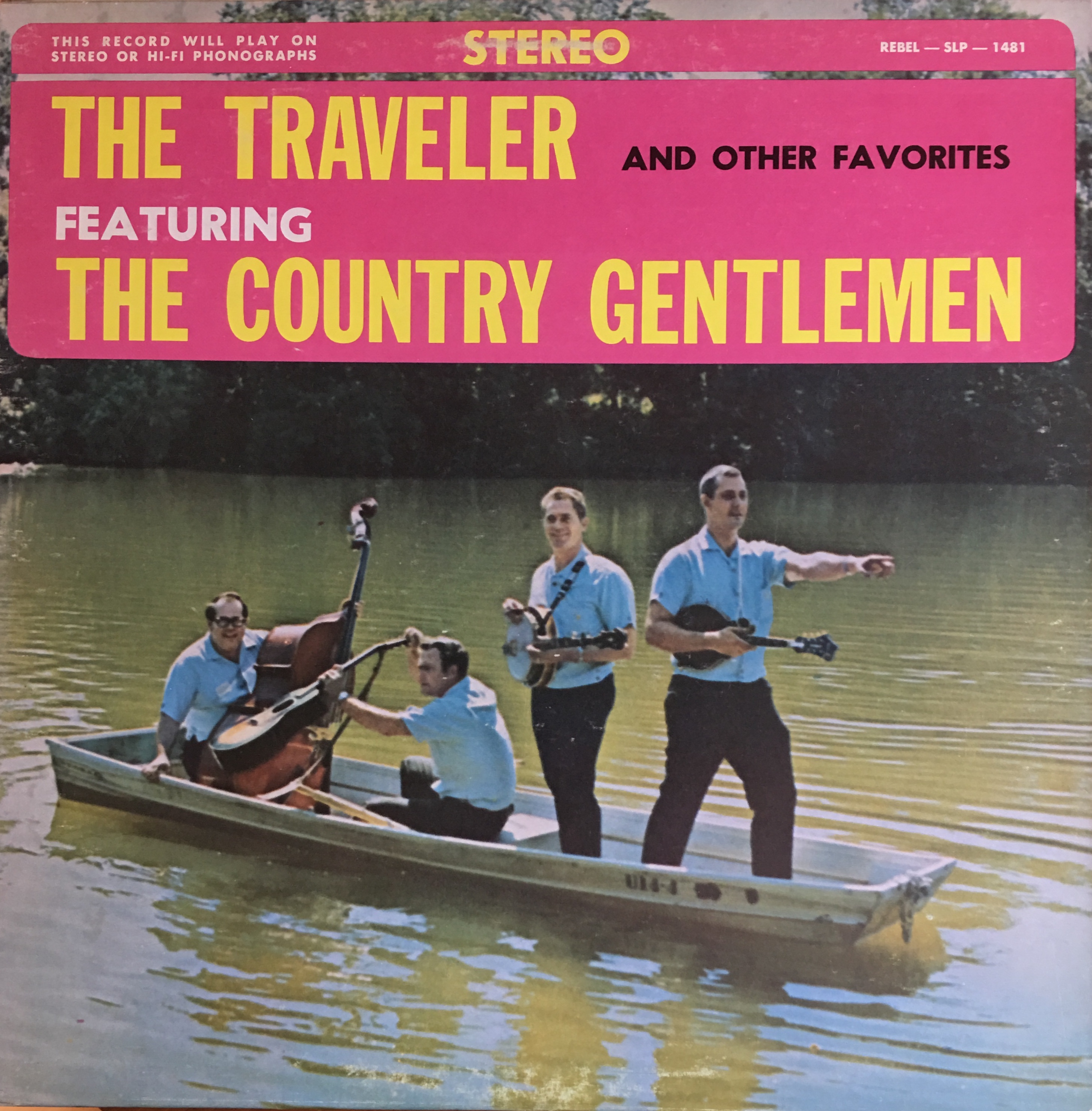
Joan Baez recorded it for Farewell, Angelina in 1965, Them released their version on Them Again in 1966, and the Byrds, whose two attempts in 1965 went unreleased at the time, put it on Ballad of Easy Rider in 1969. The Country Gentlemen, calling it simply “Baby Blue,” recorded it on 15 June 1966 at Recordings, Inc., in Baltimore, with Charlie Waller on guitar, John Duffey on mandolin, Eddie Adcock on banjo and Ed Ferris on bass. Rebel issued it on a single in January 1967, backed with “Spanish Two Step,” and again on the 1968 LP The Traveler and Other Favorites. Duffey played it again with the Seldom Scene: their Live at the Cellar Door, recorded in Washington, D.C., on 27 December 1974, with Duffey on mandolin and Tom Gray, another former Country Gentleman, on bass, came out on Rebel in 1975.




