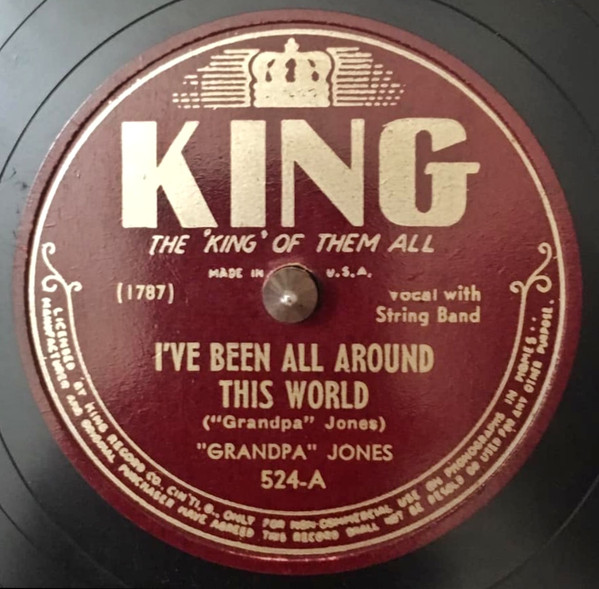
“I’ve Been All Around This World” (also titled “Been All Around This World” or “Hang Me, Oh Hang Me”) is a traditional American folk song with origins in the late 19th-century Midwest and South. The song was first formally collected in 1917 from Minnie Doyal of Arlington, Missouri, who knew it as “The Gambler”; another 1917 collection from Vance Randolph captured a version from a man named Billy Laws of Argenta, Arkansas, who explained that the song was originally a much longer ballad about a murderer hanged at Fort Smith, Arkansas, in the 1870s.
The song’s title family includes “Diggin’ on the New Railroad,” “The New Railroad,” “The Hobo’s Lament,” “The Hobo’s Blues,” and “Hang Me, Oh Hang Me” — reflecting how the floating-verse tradition collected lines from prison, railroad, and hobo song-cycles into a single circulating piece. Alan Lomax recorded a version performed by Justis Begley, the Sheriff of Hazard, Kentucky, in 1937, and Grandpa Jones cut a similar variant in the mid-1940s under the “I’ve Been All Around This World” title.
The song crossed into the bluegrass canon through Grandpa Jones, the Stanley Brothers, and many subsequent acts. The Coen Brothers’ 2013 film Inside Llewyn Davis opened with a memorable performance of the “Hang Me, Oh Hang Me” branch by Oscar Isaac, introducing the song to a wider contemporary audience. It remains a regular at jam sessions where pickers want a piece in the wandering-condemned-man tradition.