“Jesse James” is an American outlaw ballad about the Missouri bandit, who was shot dead in April 1882 by Robert Ford, a relative and former member of his gang who had been tempted by the $10,000 reward. The earliest text known is in a songster, Comic and Sentimental Songs, from 1887. The author is unknown. Many texts end by crediting a “Billy Gashade” (the 1887 songster has “Billy Lashade”), but no historical record exists of anyone by either name.
The usual text opens with James robbing the Glendale train and takes in the legend that he took from the rich and gave to the poor. It goes on to his wife and three children, and then to Ford, who had eaten at James’s table and slept in his house before shooting him, the “dirty little coward” of the chorus, who “shot Mister Howard.” Howard was the name James was living under in St. Joseph, Missouri. The ballad’s generous James is a legend: he began his career with Quantrill’s raiders and was still committing robberies when he died.
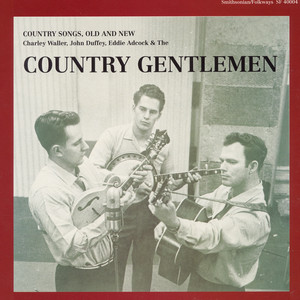
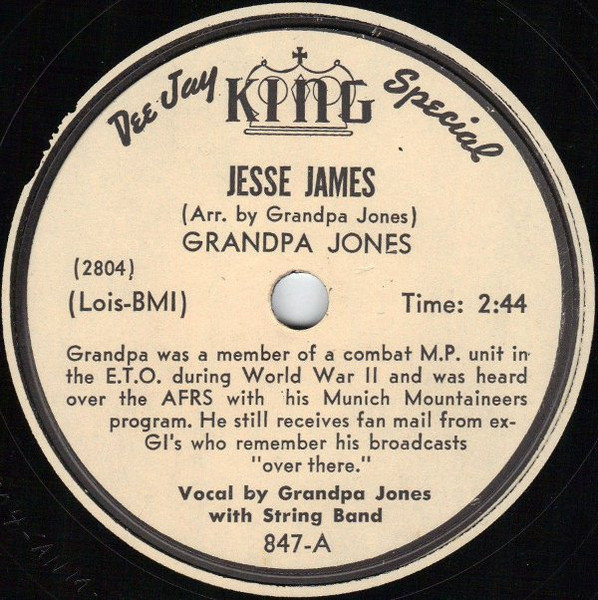
Commercial recordings began in the early 1920s. Bentley Ball’s Columbia record (A3085) is dated 1920 in the ballad literature; Bascom Lamar Lunsford’s OKeh (40155) and Ernest Thompson’s Columbia (145-D) followed in 1924, with George Reneau on Vocalion the same year, Riley Puckett on Columbia in 1925, Fiddlin’ John Carson on OKeh in 1927 and Harry McClintock on Victor in 1928. The Country Gentlemen recorded it in March 1960 at Capitol Transcriptions in Washington, D.C., for the Folkways LP Country Songs Old & New, in an arrangement credited to John Duffey; Charlie Waller sang lead with Duffey on mandolin, Eddie Adcock on banjo and Jim Cox on bass. Woody Guthrie later wrote “Jesus Christ” to the same tune.