“The Wayfaring Stranger” is one of the most enduring songs in the American folk-and-gospel tradition, and its origins are murky enough that hymnologists treat the authorship as traditional rather than firmly attributed. The earliest documented printed appearance is in the mid-19th century — the song shows up in Joseph Bever’s Christian Songster of 1858, and it has long been sung in the shape-note tradition associated with The Sacred Harp — though the lyrics and melody are widely thought to predate the print record by decades, in camp-meeting and revival traditions of the southern Appalachians.
Several origin theories circulate, none decisively settled. The central imagery — crossing the River Jordan, leaving a world of hardship for a promised home — has led some scholars to read it as descended from African-American spiritual traditions, where such crossings doubled as coded references to escape from slavery. Others trace it to a German Lutheran hymn, “Ich bin ein Gast auf Erden” (“I am a Guest on Earth”), translated into English in the early 19th century. A persistent Civil War legend that the lyrics were composed by a dying Union soldier at Libby Prison has been disproven, since the song was already in print before the war.
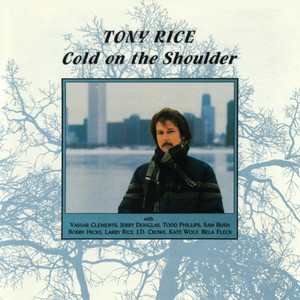
Tony Rice’s version on his 1984 Rounder album Cold on the Shoulder is one of the defining bluegrass recordings of the piece. The session featured Sam Bush on mandolin, Vassar Clements on fiddle, and Béla Fleck on banjo — a gathering of bluegrass instrumental royalty. Rice’s flatpicked guitar approach and spare vocal delivery gave the song a modal austerity that matched its spiritual gravity. The song’s reach has continued to grow: it featured memorably in the 2019 film 1917 and remains one of the most-sung gospel pieces in the bluegrass and Americana canons.