Merle Haggard
Merle Haggard (1937–2016) was a singer, songwriter, guitarist and fiddler from Oildale, California, near Bakersfield, who put nearly forty records at number one on the country charts between the late 1960s and the mid-1980s, among them “Mama Tried,” “Workin’ Man Blues” and “Okie from Muskogee.” He led his band, the Strangers, for five decades, was elected to the Country Music Hall of Fame in 1994 and received Kennedy Center Honors in 2010.
He was born Merle Ronald Haggard on 6 April 1937 in Oildale, to Jim and Flossie Haggard, who had come to California from Oklahoma, and he grew up in a converted boxcar. His father, a railroad carpenter, died in 1946, when Merle was nine. In his teens he ran away from home again and again and was sent to two reform schools, while playing guitar and singing wherever he could: in clubs in Southern California and, for three weeks, on the Smilin’ Jack Tyree radio show in Springfield, Missouri. The three singers who influenced him most, and whose songs he came back to all his life, were Lefty Frizzell, Jimmie Rodgers and Bob Wills.
In 1957 he was caught burglarizing a Bakersfield roadhouse, and after an attempted escape from the county jail he was sent to San Quentin, where he served three years and saw Johnny Cash perform. Paroled in 1960, he went back to music, playing bass in Wynn Stewart’s band in Las Vegas and working with Buck Owens. In 1972 Governor Ronald Reagan pardoned him.
Fuzzy Owen, another Bakersfield musician, signed him to his small Tally label in 1962, and the first single paired “Singin’ My Heart Out” with “Skid Row.” Around October 1963, at Audio Arts in Hollywood, he recorded Stewart’s “Sing a Sad Song,” with Roy Nichols and Stewart on guitars, Ralph Mooney on steel, Bobby Austin on bass, Helen Price on drums and George French on piano, and it became his first hit. In August 1964, in Las Vegas, he cut duets with the singer Bonnie Owens, among them “Just Between the Two of Us,” and “(My Friends Are Gonna Be) Strangers,” recorded that summer, became his fourth Tally single and reached the Billboard Top Ten in 1965.
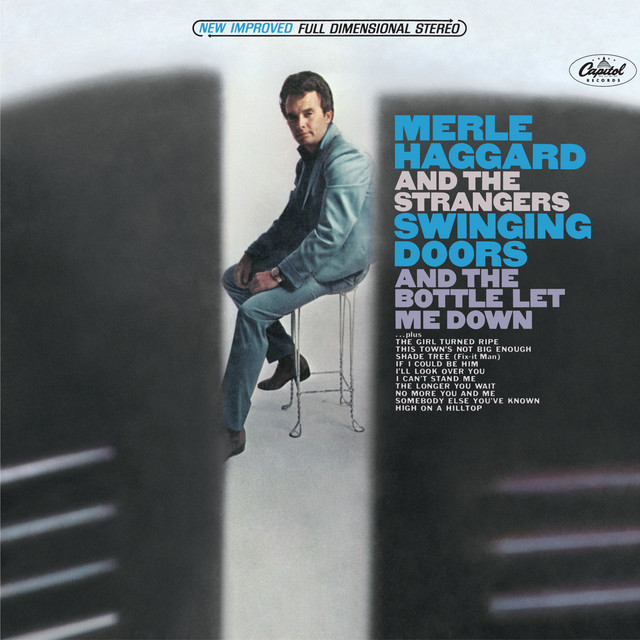
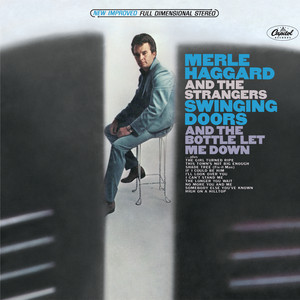
Capitol signed him that year and issued his first album, Strangers, in September 1965; the band he formed in 1965 carried the same name. Bonnie Owens, his wife from 1965 to 1978, was a regular member of his show and sang harmony on many of his Capitol sessions, and their duet album Just Between the Two of Us came out in 1966. With Ken Nelson and Fuzzy Owen producing, the early Capitol records used Hollywood session players: Phil Baugh, Billy Mize and Lewis Talley were the guitarists on “Swinging Doors” on 1 December 1965, and James Burton and Glen Campbell on “The Bottle Let Me Down” on 28 June 1966. That year the Academy of Country and Western Music voted him its most promising vocalist.
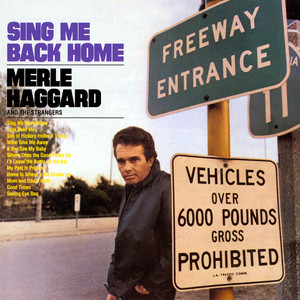
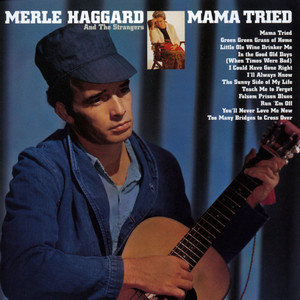
His first number one was Liz Anderson’s “I’m a Lonesome Fugitive,” recorded in Hollywood on 1 August 1966 after an unissued attempt in Nashville that March; it topped the chart in 1967. “Branded Man” followed, recorded on 10 April 1967, and then two of his own songs, “Sing Me Back Home,” on 20 September 1967, and “The Legend of Bonnie and Clyde,” on 31 January 1968; “Today I Started Loving You Again” was cut the next day. By the autumn of 1967 two of the Strangers, Roy Nichols and the steel guitarist Norman Hamlet, were working alongside Glen Campbell and the other session men, and both are on “Mama Tried,” recorded on 9 May 1968 and the title song of an album that September; in 1999 “Mama Tried” entered the Grammy Hall of Fame. On 9 December 1968 he recorded “Hungry Eyes” and “Silver Wings,” and on 16 May 1969 “Workin’ Man Blues.”
He also paid tribute to his influences on record. Same Train, a Different Time (1969) was a double album of Jimmie Rodgers songs, and for A Tribute to the Best Damn Fiddle Player in the World, recorded in Hollywood in April 1970 and issued that November, the Strangers were joined by Eldon Shamblin, Tiny Moore, Johnnie Lee Wills, Johnny Gimble, Joe Holley and Gordon Terry; by the 1970s his band included some of Bob Wills’s former sidemen. “Okie from Muskogee,” recorded on 17 July 1969 with James Burton, Roy Nichols, Norman Hamlet and the drummer Ronnie Tutt, spent four weeks at number one at the height of the Vietnam War, and a live album recorded in Muskogee, Oklahoma, that October took its name. In 1970 the Country Music Association named “Okie from Muskogee” single and album of the year and Haggard Entertainer of the Year, and the Academy of Country Music also chose him as Entertainer and the song as Single of the Year. His own accounts of what the song meant changed over the years, and he followed it with “The Fightin’ Side of Me,” recorded on 23 December 1969.
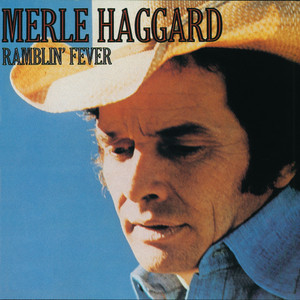
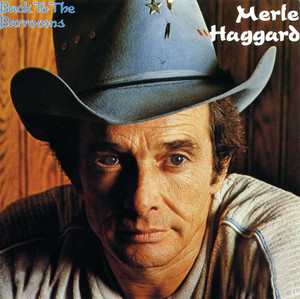
In 1972 the astronaut Charles Duke carried a tape of his music aboard Apollo 16, and the CMA named Let Me Tell You About a Song album of the year; in 1973 he and the Strangers played for President Richard Nixon at the White House. “If We Make It Through December” was recorded in Nashville on 16 January 1973, and on “Kentucky Gambler,” cut there on 16 September 1974, Dolly Parton sang harmony. He moved from Capitol to MCA in 1977: “Ramblin’ Fever,” the title song of his first MCA album, was recorded at Fireside Studio in Nashville on 25 February 1977 with Grady Martin on guitar, Bob Moore on bass and Buddy Harman on drums, and “Back to the Barrooms Again” at the Eleven-Eleven studio there on 16 May 1980 with the Strangers. Haggard called the band’s improvising “country jazz,” and in 1980 he became the first country artist on the cover of the jazz magazine Downbeat.
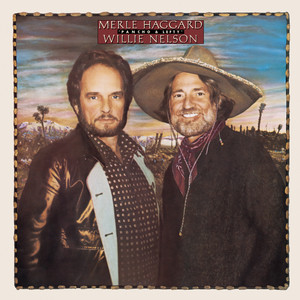
Epic signed him in 1981. “Big City,” recorded in Hollywood on 9 July 1981 with the Strangers, Tiny Moore and Jimmy Belkin on fiddles and Don Markham on horns, was the title song of his first Epic album that October. In 1982 he made A Taste of Yesterday’s Wine with George Jones and, with Willie Nelson at the Pedernales studio in Spicewood, Texas, Pancho & Lefty, whose title song, written by Townes Van Zandt, went to number one in 1983, as did the album. That year he and the Strangers also played at a barbecue at President Reagan’s ranch. “That’s the Way Love Goes,” recorded in Nashville on 6 January 1983, won him the Grammy for Best Country Vocal Performance, Male, for 1984. The singer Leona Williams, to whom he was married for a time, wrote his number one “You Take Me for Granted” and co-wrote another, “Someday When Things Are Good,” with him. He and Nelson made a second album at Pedernales, Seashores of Old Mexico, in 1987, the year Roy Nichols left the Strangers after twenty-two years.
He was elected to the Country Music Hall of Fame in 1994. By then he was recording at his own Tally Studio in Palo Cedro, and in 1998 he was one of the singers on “Same Old Train,” with Earl Scruggs, Ricky Skaggs, Marty Stuart, Alison Krauss, Patty Loveless, Emmylou Harris, Dwight Yoakam and others, which won the Grammy for Best Country Collaboration with Vocals. The Peer Sessions (Audium, 2002) was a tribute to early country recordings, among them “Peach Pickin’ Time in Georgia” and “Shackles and Chains,” which he had cut at Tally Studio on 3 January 1998. In 2000 he signed with Anti-, an imprint of the Los Angeles punk label Epitaph, for If I Could Only Fly, and on Roots, Volume 1 (2001) he worked with the guitarist Norm Stephens, who had played on Lefty Frizzell’s early records.
In 2006 BMI named him an Icon and the Recording Academy gave him its Lifetime Achievement Award; he entered the Songwriters Hall of Fame in 2007, thirty years after the Nashville Songwriters Hall of Fame. In 2007 he released Last of the Breed with Willie Nelson and Ray Price and, on McCoury Music, The Bluegrass Sessions, recorded in Hendersonville, Tennessee, on 6 and 7 November 2006 with Carl Jackson on guitar and tenor vocals, Marty Stuart on mandolin, Charlie Cushman on banjo, Rob Ickes on Dobro, Aubrey Haynie on fiddle and Ben Isaacs on bass. Alison Krauss sang high baritone on its new “Mama’s Hungry Eyes,” and the album also remade “Big City” alongside “Jimmie Rodgers Blues” and “Runaway Momma.” In the fall of 2012 he recorded in Nashville with Mac Wiseman, in sessions produced by his former harmony singer Ronnie Reno with Vince Gill, Carl Jackson, Marty Stuart and Rob Ickes; the songs, among them “Jimmy Brown the Newsboy” and “I Wonder How the Old Folks Are at Home,” came out in 2015 as Timeless.
He received Kennedy Center Honors in 2010, the year Vanguard issued I Am What I Am, and Nelson joined him on a new “Working Man Blues” for Working in Tennessee (2011). Their last duet album, Django and Jimmie, came out on Legacy in June 2015 and opened at number one on the Billboard country albums chart. Haggard kept touring, and his final session, on 9 February 2016, had his son Ben on electric guitar and Norman Hamlet, on his records since 1967, on steel. He died at his home in Palo Cedro, near Redding, California, on 6 April 2016, his 79th birthday.
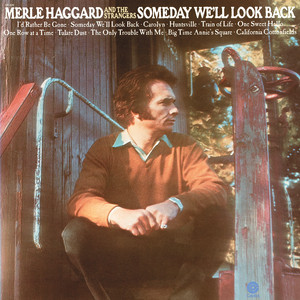
These are the recordings in our catalog that credit Merle Haggard. We add more all the time.

-
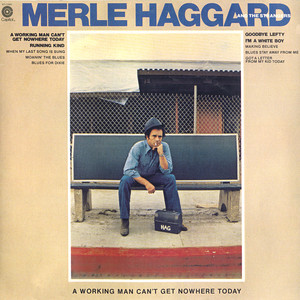
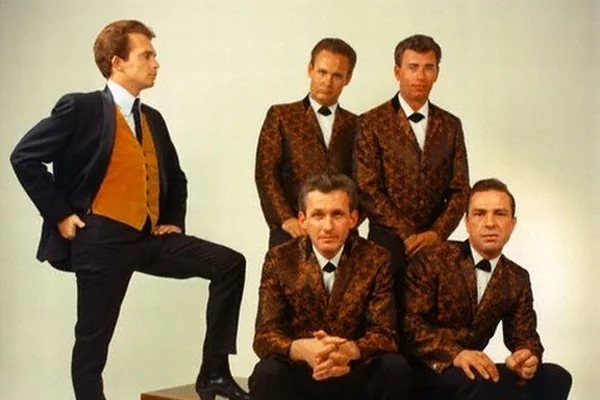 Merle Haggard and the StrangersPlayed on with Merle Haggard and the Strangers
-
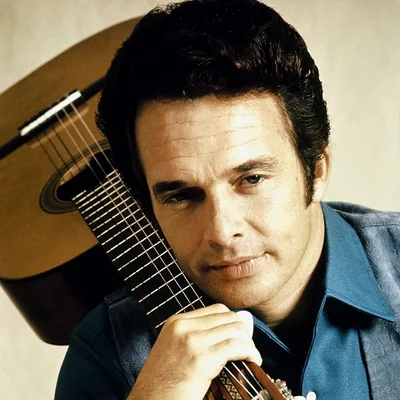 Merle HaggardPlayed on with Merle Haggard
-
Merle Haggard and Willie NelsonPlayed on with Merle Haggard and Willie Nelson