Album

Musicians
- Uwe Kruger — Lead Vocals, Guitar
- Jens Kruger — Banjo
- Joel Landsberg — Bass
By:John J. Puderer, Robert Hoffman · Source Recording: Song details
I'm Alabama bound
Alabama bound
I've got a mule to ride
If the train breaks down
If my mule won't go
Honey don't you toll
Lord I'm goin' to Alabama
If I have to roll
Oh the preacher got lonesome
He throwed his Bible down
Said he's be in Alabama
'Fore the sun went down
Oh I went to the levy
Hard work I done
Then I went to the tavern
Now my money's all gone
If your woman leaves you
Boys don't you wear no black
Some cold frosty mornin'
She'll be creepin' back
Well I had a good time
But I'll have to agree
That these doggone women's
Got the best of me
That’s your free listen. With an account the band keeps going — this song and every other one, as many times through as you like, in any key, at any tempo. Free for 14 days, no card.
Start my free 14 daysClicks before the band comes in, so you start together.
Raises the tempo as the band goes round, so you build up speed.
The band goes quiet for a bar or two and you keep the time going.
By:John J. Puderer, Robert Hoffman · Source Recording:Doc and Merle Watson (1971)
“Alabama Bound” began as an instrumental. “I’m Alabama Bound” was a ragtime two-step composed by Robert Hoffman and published by Robert Ebberman in New Orleans in 1909. The cover of the first edition advertised it as “Also Known As The Alabama Blues,” which has led some to suspect it of being one of the first blues songs, although as written it is an up-tempo rag with no lyrics. In November 1909 Prince’s Band recorded the first lyrics set to the music (Columbia A-901), with the music credited to Hoffman and the words to John J. Puderer, who ran The Music Shop in New Orleans, the firm that published Hoffman’s sheet music. The source of those words is unclear, and they may have come out of a folk tradition. An 1849 minstrel song, “I Hab Leff Alabama,” by Marshall S. Pike, contains the earliest lyrics found that express the same sentiment, though its chorus used a different melody.
The lyric is a string of rambling verses. A preacher gets drunk, throws his Bible down and tells the congregation he is Alabama bound; if the train doesn’t run, the singer has a mule to ride. He has been in your city, your town and your mountains with the blues all around, and he jumps in the river and starts to drown before spotting a red-headed woman.
Versions multiplied under different titles. The Tennessee Ramblers recorded “Preacher Got Drunk and Laid His Bible Down” in 1928, with the words “Alabama bound” in the chorus; their banjo player, James “Mack” Sievers, said he learned the song from an African-American blues musician in Knoxville. Trixie Smith claimed composing credit for “Railroad Blues” (Paramount, 1925) and Jelly Roll Morton for “Don’t You Leave Me Here” (Bluebird, 1939), both with lyrics that include “Alabama bound.” Lead Belly’s 1940 Victor record is perhaps the best-known version.
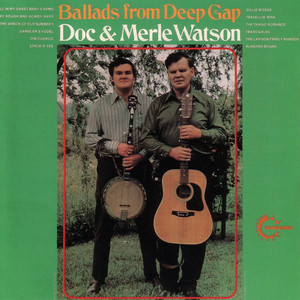
Dian and the Greenbriar Boys recorded it for Elektra in 1963, with Ralph Rinzler on mandolin and Bob Yellin on banjo, and Doc and Merle Watson included it on Ballads from Deep Gap (Vanguard, 1971). Bill Harrell and the Virginians recorded it on 6 January 1985 at Bias Recording in Springfield, Virginia, with Eddie King on mandolin, Darrell Sanders on banjo and Carl Nelson on fiddle, for Do You Remember? (Rebel REB 1640, 1985). Peter Rowan recorded it for Carter Stanley’s Eyes (Rebel, 2018).
Please choose a song.
Clicks before the band comes in, so you start together.
Raises the tempo as the band goes round, so you build up speed.
The band goes quiet for a bar or two and you keep the time going.
Clicks before the band comes in, so you start together.
Raises the tempo as the band goes round, so you build up speed.
The band goes quiet for a bar or two and you keep the time going.
Loading chord chart…
Every song and every practice tool, free for 14 days. No card, nothing to cancel. Already have an account? Log in

Free for 14 days. No card needed.
Create an account and the whole thing is yours free for 14 days — every song in the catalog, every practice tool. No card needed.
Everything free for 14 days


Plus every chart in any key, playlists and printing.
Start my free 14 daysNo card, nothing to cancel.

