“Dreadful Wind and Rain” is one of the American names for “The Two Sisters” (Scots “The Twa Sisters”), a murder ballad that the folklorist Francis James Child collected as Child Ballad 10. It is first known from a broadside of 1656, “The Miller and the King’s Daughter,” and at least 21 English variants exist under titles that include “Binnorie,” “The Cruel Sister,” “The Wind and Rain” and “The Bonny Swans.” Similar songs are found across Europe, especially in Scandinavia. Cecil Sharp collected it on both sides of the Atlantic, from Lucy Dunston in Bridgwater, Somerset, in 1909 and from Jenny Combs in Berea, Kentucky, in 1917.
The story is of a girl drowned by her jealous sister. In the version Jerry Garcia and David Grisman recorded, two sisters walk down a stream and the one behind pushes the other in; a suitor named Charlie has given the younger sister a ring and the elder nothing. The drowned girl floats to a miller’s pond, where the miller hooks her out and leaves her on the bank to dry. A passing fiddler takes thirty strands of her long yellow hair for a bow, her finger bones for pegs, and her breastbone for the body of a fiddle, and the only tune the instrument will play is the refrain, “Oh, the dreadful wind and rain.” In most versions of the older ballad the instrument is a harp or fiddle made from the drowned girl’s body, with her hair for strings, and it sings about the murder itself. The American variant typically omits the haunted instrument and ends with the miller robbing the corpse.
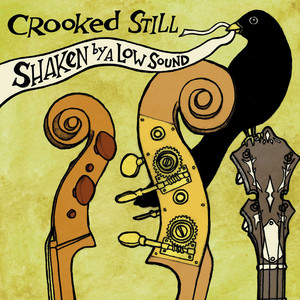
The song has had many recordings. Jody Stecher recorded it as “O the Wind and Rain” on Going Up on the Mountain (Bay, 1977), and the Jerry Garcia Acoustic Band recorded it on Almost Acoustic in 1988. Jerry Garcia and David Grisman recorded it as “Dreadful Wind and Rain” for Shady Grove, released on Acoustic Disc in September 1996. Crooked Still recorded it as “Wind and Rain” on Shaken by a Low Sound (2006).