“John Henry Blues” is the title under which the ballad of John Henry first reached records. The song tells of a Black steel driver who matches his hammer against a steam drill on a railroad tunnel, wins, and dies. Where that happened has been argued since folklorists took up the question in the 1920s, with cases made for the Chesapeake and Ohio’s Big Bend Tunnel in West Virginia, the Lewis Tunnel in Virginia and a tunnel in Alabama.
The first record was Fiddlin’ John Carson’s. The Georgia fiddler sang and played it alone at an OKeh session in Atlanta in late March 1924, with Ralph Peer producing. It came out as one side of a twelve-inch disc, OKeh 7004, backed with “Dixie Cowboy.” Three years later, on 23 March 1927, Peer recorded it again in Atlanta with Earl Johnson and His Dixie Entertainers. Johnson sang and played fiddle, with Byrd Moore on guitar and Emmett Bankston on banjo, both of whom also sang. OKeh issued it in April 1927 (OKeh 45101), coupled with “I Don’t Love Nobody.” Later that year Johnson was in the studio with Carson himself, playing fiddle and singing duets on Carson’s October 1927 sessions.
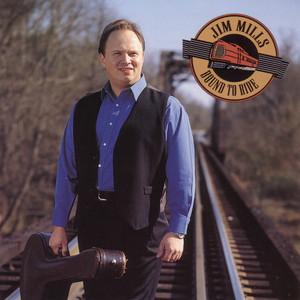
The banjo player Jim Mills arranged it for his 1998 Sugar Hill album Bound to Ride. Tim Stafford sang lead and played guitar, Don Rigsby sang tenor and Mills sang baritone, with Adam Steffey on mandolin, Stuart Duncan on fiddle and Barry Bales on bass. The verses Stafford sings put the contest at the center. John Henry asks his captain to bring him a nine-pound hammer from town. He warns his shaker, the man holding the steel, to pray, since a miss means “tomorrow’ll be your buryin’ day.” He sinks the steel fourteen feet to the drill’s nine and swears he will hammer himself to death before the machine beats him. The song closes on the boast that no such steel-driving man was ever born in the United States.