“Molly and Tenbrooks” is built on a real race. On 4 July 1878 the Kentucky horse Ten Broeck met the California mare Mollie McCarty in a four-mile match race at the Louisville Jockey Club, now Churchill Downs, in front of a record crowd of about 30,000. Ten Broeck, ridden by the African American jockey Billy Walker, won, and it was the first defeat of Mollie McCarty’s career. The song’s ending is invented: it buries Molly “in a coffin ready made,” but the mare raced again, won the Garden City Cup in Chicago, and lived until March 1883.
In the song Tenbrooks is a big bay horse with a shaggy mane who “beat the Memphis train,” while Molly, who did as she pleased out in California, comes back to Kentucky and is beaten “with all ease.” The two horses trade words in the middle of the race, a rider called Kiper is told to give Tenbrooks the bridle and let him run, and the crowd laughs, cries and hollers as Tenbrooks flies.
The song was on record by 1929. On 6 September of that year, in Richmond, Indiana, the Carver Boys cut it as “Tim Brook,” with Warner Carver singing and playing banjo and Noble Carver singing tenor; Paramount issued it on 3199. Bill Monroe and his Blue Grass Boys were playing it on Grand Ole Opry broadcasts in 1946–47, with Earl Scruggs on banjo, and recorded it for Columbia on 28 October 1947 at the WBBM studio in Chicago: Monroe sang it alone and played mandolin, with Lester Flatt on guitar, Scruggs on banjo, Chubby Wise on fiddle and Howard Watts on bass. Columbia credited Monroe as composer but held the record back until 12 September 1949, when it appeared as “Molly and Tenbrooks (The Race Horse Song)” on the B side of “I’m Going Back to Old Kentucky” (Columbia 20612).
By then the Stanley Brothers had their own version out. They recorded it at radio station WOPI in Bristol for Rich-R-Tone, which released it around September 1948 (Rich-R-Tone 418), with Pee Wee Lambert singing lead and playing mandolin, Ralph Stanley on three-finger banjo, Carter Stanley on guitar and Art Wooten on fiddle. Ralph Stanley later said the band had learned it by listening to the Blue Grass Boys at shows, each man writing down a verse, and that it was the closest they ever came to sounding like Monroe’s band; Monroe, he said, was angry that their record came out first. The historian Neil V. Rosenberg identifies it as the first record on which a second band took up the Blue Grass Boys’ style.
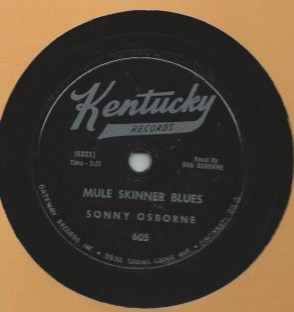
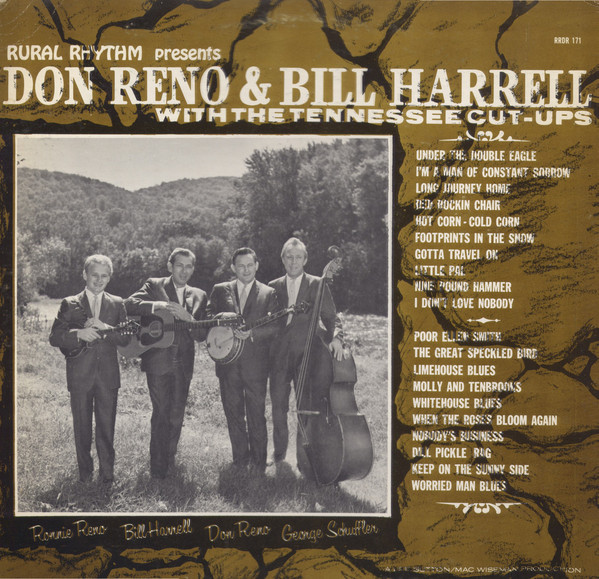
Monroe recorded the song again for Decca on 15 May 1957 in Nashville, with Joe Stuart, Gordon Terry and Dale Potter all on fiddle; it came out on Decca 9-30486 that November and on Knee Deep in Blue Grass. Sonny Osborne cut it in Cincinnati in August 1953 for the Kentucky label, with Bobby Osborne on mandolin. Rose Maddox sang it on Rose Maddox Sings Bluegrass (Capitol, 1962), recorded on 19 March 1962 with Monroe on mandolin, Don Reno on banjo and Red Smiley on guitar. The Osborne Brothers recorded it at Bradley’s Barn on 8 February 1968 for Yesterday, Today & the Osborne Brothers (Decca), and Tom T. Hall cut it in Nashville on 13 July 1976 for The Magnificent Music Machine (Mercury), with Monroe on mandolin and Kenny Baker on fiddle. The Bluegrass Album Band, with Tony Rice singing lead, recorded it on 22 September 1980 in Berkeley, California, for The Bluegrass Album (Rounder 0140, 1981), with J. D. Crowe, Doyle Lawson, Bobby Hicks and Todd Phillips.