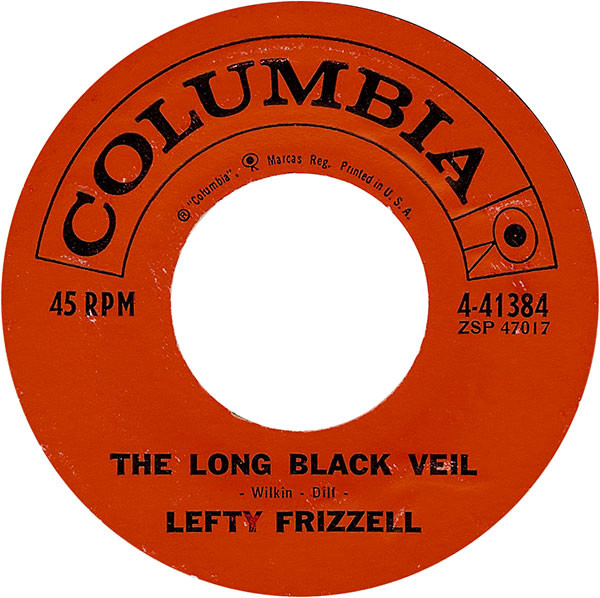
“Long Black Veil” was written by Danny Dill and Marijohn Wilkin in 1959 and first recorded that year by Lefty Frizzell in Nashville, with Don Law producing, Wilkin on piano and Don Helms on steel guitar. The single reached number six on Billboard’s country chart and was Frizzell’s best-performing single in five years. The writers later said they had drawn on three things: Red Foley’s recording of “God Walks These Hills with Me,” a newspaper report about the unsolved murder of a priest, and the legend of a mysterious veiled woman who regularly visited Rudolph Valentino’s grave. Dill himself called it an “instant folksong.” The song was a departure from Frizzell’s earlier honky-tonk records, a deliberate move toward the folk-styled material then in fashion and the developing Nashville sound.
The song is sung by a man who has been hanged for a murder he did not commit. A killing took place under the town hall light ten years before, and witnesses agreed that the man who ran looked like him. Asked by the judge for an alibi, he said nothing, because on that night he had been with his best friend’s wife. The woman, in a long black veil, now visits his grave, and the refrain says that no one knows but him.
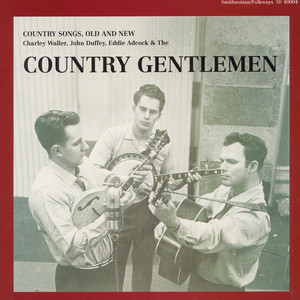
Johnny Cash recorded it for Johnny Cash at Folsom Prison (1968), the Band for Music from Big Pink (1968), and Joan Baez for Joan Baez in Concert, Part 2 (1963). Nick Cave and the Bad Seeds included it on Kicking Against the Pricks (1986), and Mick Jagger sang it with the Chieftains on their 1995 album The Long Black Veil. The Country Gentlemen recorded it on Country Songs, Old and New (1960) and Bill Monroe and his Blue Grass Boys on Kentucky Blue Grass (1970). Jerry Garcia, David Grisman and Tony Rice recorded it in 1993 for The Pizza Tapes, and Robert Earl Keen included it on Happy Prisoner: The Bluegrass Sessions (2015). In March 2019 the Library of Congress added Frizzell’s recording to the National Recording Registry.