“What Wondrous Love Is This,” usually shortened to “Wondrous Love,” is a Christian folk hymn from the American South. Its words were first printed around 1811 in a camp-meeting songbook published in Lynchburg, Virginia, during the Second Great Awakening, and the early printings give no author. A Methodist pastor from Oxford, Georgia, named Alexander Means is named as the author in the 1848 hymnal The Hesperian Harp.
Most sources trace the melody to “The Ballad of Captain Kidd,” an English song of 1701 about the pirate William Kidd, which was well known to camp-meeting singers who fitted hymn texts to popular tunes. The words and tune were first printed together in the appendix to the 1840 edition of William Walker’s shape-note book The Southern Harmony, with a three-part setting by James Christopher of Spartanburg, South Carolina. The Sacred Harp included it in its first edition in 1844 and every edition since. The hymn is sung in Dorian mode, though The Southern Harmony and some later hymnals notated it in natural minor.
The verses open with wonder at the love that moved the Lord of bliss to bear the curse for the singer’s soul, and then follow the singer from sinking down under God’s frown, through Christ laying aside his crown, to the vow to sing on through eternity once free of death.
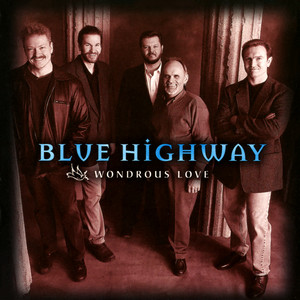
Pete Seeger included it on Frontier Ballads in 1954, and Samuel Barber wrote a set of organ variations on it, Wondrous Love, in 1958. In bluegrass, the banjo player Bill Evans recorded it with a vocal by Suzanne Thomas on Native and Fine (Rounder, 1995), and Blue Highway opened their album Wondrous Love (Rounder, 2003) with it at Dark Horse Studios in Franklin, Tennessee: Wayne Taylor sings lead over Shawn Lane’s mandolin, joined by Lane, Tim Stafford, Jason Burleson and Alan O’Bryant on the other parts.