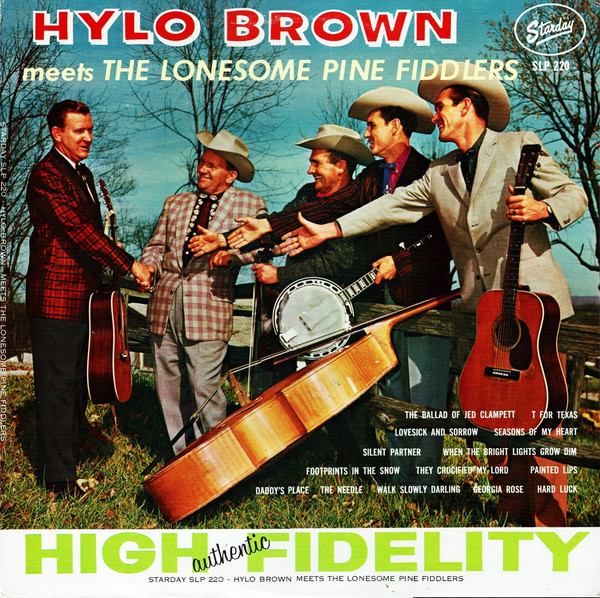
“Footprints in the Snow” began on the British music-hall stage as “Footmarks in the Snow,” written and composed by Harry Wright and in the halls by the spring of 1876, when it was a hit for both “Jolly Little” Lewis and Wright’s wife, Nellie Gannon. Wright and Gannon warned off unlicensed singers, but printers pirated it in broadsides and songsters on both sides of the Atlantic, often as “I Traced Her Little Footprints in the Snow,” and it passed into oral tradition: song collectors later took it down from traditional singers in Oxfordshire, Norfolk, Sussex and Yorkshire, and in West Virginia, Vermont, Kentucky, Arkansas and North Carolina. In the original, the singer calls on his sweetheart one winter afternoon, learns she has gone out walking, follows her footmarks down a lane to the moor where she has lost her way, and ends the song married to her.
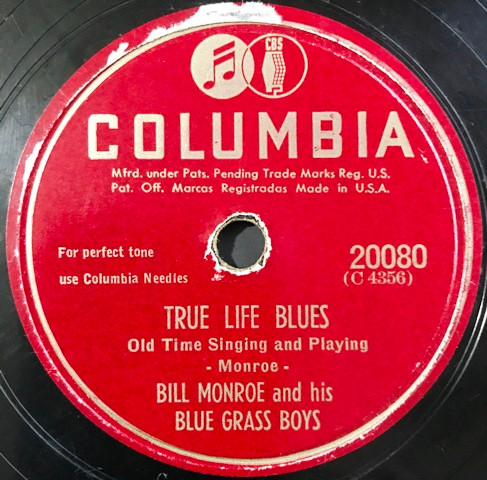
The earliest recording found is “Little Foot Prints,” made by Ernest Branch and the West Virginia Ramblers in Richmond, Indiana, around 4 June 1931. Bill Monroe and his Blue Grass Boys recorded it on 13 February 1945 at the CBS studio of radio station WBBM in Chicago’s Wrigley Building, with Art Satherley producing; Tex Willis played guitar, David “Stringbean” Akeman banjo, Chubby Wise fiddle and Sally Ann Forrester accordion. Columbia held it until 28 October 1946, when it came out as the B side of “True Life Blues” (Columbia 37151), the label crediting Boyd Lane as arranger. In Monroe’s version the singer prefers winter to summer because he found Nellie when the snow was on the ground; her mother tells him she has stepped out, he traces her footprints, and a last verse places her in heaven with the angel band, every snowfall bringing her back to mind.
Monroe recorded it again for Decca on 18 July 1952 at Castle Studio in Nashville, singing lead with Jimmy Martin on guitar, Sonny Osborne on banjo, Charlie Cline on fiddle and Ernie Newton on bass; Decca issued it in October 1952 with “In the Pines,” this time crediting the song to “Rupert Jones.” Rod Stradling, in notes to a 2020 Musical Traditions anthology, writes that Rupert Jones was a name under which Monroe claimed the song, and that Monroe had learned it in the early 1930s at the National Barn Dance in Chicago. In Britain, the Tennessee-born singer Johnny Duncan and his Blue Grass Boys took it to No. 22 on the singles chart in 1957. Clint Howard sang it with Doc Watson and Fred Price on Folkways’ Old Time Music at Clarence Ashley’s (1961), and Mac Wiseman released it as a Capitol single in 1962.