“I Wish I Was a Mole in the Ground” is a traditional song, and its first recordings were made by Bascom Lamar Lunsford, a singer and banjo player born in Mars Hill, North Carolina, in 1882. Lunsford said he learned it in 1901 from Fred Moody, a North Carolina neighbour. He recorded it for OKeh in Atlanta on 15 March 1924, singing to his own banjo, and it came out on OKeh 40155 with “Jesse James” on the other side. He cut it again on 6 February 1928 at Ashland, Kentucky, for Brunswick 219, and that second recording is the one Harry Smith put on Volume Three (“Songs”) of the Anthology of American Folk Music, issued by Folkways in 1952.
The verses are loosely connected. The singer wishes he were a mole in the ground so he could “root that mountain down,” or a lizard in the spring so he could hear his true love sing; a woman wants a nine-dollar shawl; a railroad man will kill you if he can and drink up your blood like wine; and a voice asking “where you been so long” is told the singer has been in “the bend” with rough and rowdy men. Smith’s Anthology notes called the mole and lizard wishes “quite surrealistic” and guessed that “the bend” was the Big Bend penitentiary, adding that Lunsford described the song as a product of the Pigeon River valley. The tune is related to songs known as “Tempie,” “Darling, Where Have You Been So Long” and “I Don’t Like No Railroad Man,” and the critic Robert Cantwell wrote that you could study every printed version “and you still won’t fathom it.” The railroad men who drink your blood like wine turn up again in Bob Dylan’s “Stuck Inside of Mobile with the Memphis Blues Again” (1966).
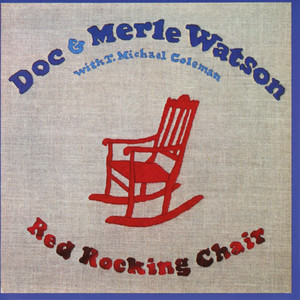
After the Anthology, the song was taken up by revival singers: Lisa Kindred sang it on Vanguard’s New Folks Vol. 2 in 1964, and Mike Seeger recorded it in 1992 for Animal Folk Songs for Children. Hylo Brown recorded it in Akron, Ohio, for his 1967 Rural Rhythm album Legends & Tall Tales. Doc Watson sang it to his own banjo in December 1980 at Crimson Sound in Santa Monica, with Merle Watson on guitar and T. Michael Coleman on bass, for Red Rocking Chair (Flying Fish, 1981). His verses bring in a Timpy who wants the nine-dollar shawl and is asked to let her hair roll down, and add wishes to be a little turtle dove. Bob Neuwirth and Eliza Carthy performed it at London’s Royal Festival Hall on 2 July 1999 for The Harry Smith Project, a tribute to the Anthology.