Hazel Dickens wrote “Won’t You Come and Sing for Me.” She was born in 1925 in Montcalm, West Virginia, the eighth of eleven children in a coal-mining family, and her father was a Primitive Baptist preacher who played the banjo. The song is a plea from someone near death. The singer feels the shadows closing in and the angels calling, and asks a fellow Christian to come and sing once more the hymns the two of them used to sing in a plain country church with worn benches. The singer’s load has grown heavy and the road has been long, and one more song would warm the heart before the crossing of the dark river, until the two meet again where there is no more parting.
Dickens and Alice Gerrard, who then recorded as Alice Foster, cut the song in 1965 at Mastertone Studio in New York. Gerrard sang lead and played guitar. Dickens sang tenor and played bass, David Grisman sang baritone and played mandolin, and Fred Weisz sang bass, with Lamar Grier on banjo and Billy Baker on fiddle. The recording stayed unreleased for eight years. In 1973 Folkways made it the title track of the pair’s second album, Won’t You Come & Sing for Me (FTS 31034), and in 1996 Smithsonian Folkways reissued it on the CD Pioneering Women of Bluegrass.
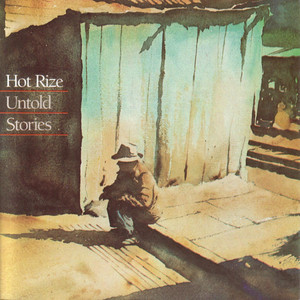
Hot Rize recorded it for Untold Stories (Sugar Hill, 1987) at Colorado Sound Recording in Westminster, Colorado, with Tim O’Brien singing lead and Nick Forster and Pete Wernick on harmony. Delia Bell and Bill Grant made it a duet on Following a Feeling (Rounder, 1988), cut at Bias Recorders in Springfield, Virginia, with Dudley Connell, David McLaughlin, Tom Adams, Eddie Stubbs and Marshall Wilborn backing them. Jody Stecher and Kate Brislin sang it on Our Town (Rounder, 1993). After Dickens died in 2011, Laurie Lewis and the Right Hands included it on The Hazel and Alice Sessions (2016), recorded at the LewieToons Studio in Berkeley. Dickens and Gerrard were inducted together into the International Bluegrass Music Hall of Fame in 2017.