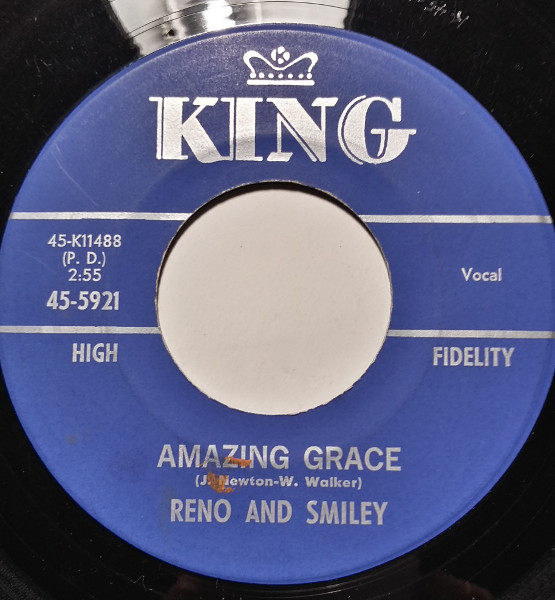
“Amazing Grace” is one of the most widely sung Christian hymns in the English-speaking world. The lyrics were written by John Newton, the English Anglican curate of Olney, Buckinghamshire, in late 1772; he is generally believed to have used the hymn for the first time at a prayer meeting on January 1, 1773, where it accompanied a sermon on the New Year. The poem was originally titled “Faith’s Review and Expectation.”
The hymn was first published in 1779 as Hymn 41 in Book I of Olney Hymns, the joint hymnbook produced by Newton and his friend the poet William Cowper. Newton contributed 280 of the 348 hymns in the volume; “Amazing Grace” appeared with the scripture reference 1 Chronicles 17:16–17, in six four-line stanzas, without music. The familiar tune commonly used today (often called “New Britain”) was paired with Newton’s text only in 19th-century American shape-note hymnody.
“Amazing Grace” entered the bluegrass and gospel canon through the long tradition of Appalachian sacred singing, where the hymn settled comfortably into both shape-note and four-part harmony arrangements. It remains one of the most-sung pieces at any bluegrass-gospel set and at virtually every funeral and memorial service in the broader American Christian tradition.