Steve Goodman wrote “City of New Orleans” about the Illinois Central Railroad’s daytime train between Chicago and New Orleans. By his own account it grew out of a trip he and his wife made on the line from Chicago to Mattoon, Illinois, to visit her family. He recorded it for his first album, Steve Goodman, which Buddah released in November 1971, and Buddah put it out as a single in January 1972.
The song rides the train south through a single day and night. It leaves Chicago on a Monday morning with fifteen cars, three conductors and twenty-five sacks of mail, rolls out of Kankakee past farms, freight yards and graveyards of rusted automobiles, and takes in the club car, where old men deal cards at a penny a point and pass a bottle in a paper bag, and the sons of Pullman porters and engineers riding their fathers’ “magic carpet made of steel.” By midnight the passengers are changing cars in Memphis and rolling through the Mississippi darkness, while the towns fade and the old steel rail “ain’t heard the news”: the train has “the disappearin’ railroad blues.” The chorus is sung by the train itself, greeting America as its native son.
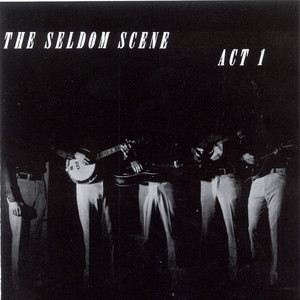
Goodman played the song for Arlo Guthrie at the Quiet Knight, a Chicago club, and Guthrie asked to record it. His version, on Hobo’s Lullaby, reached No. 18 on the Billboard Hot 100 and No. 4 on the Easy Listening chart in 1972. Others had recorded it before that. John Denver included it on Aerie, also released in November 1971, and Mac Wiseman recorded it at RCA Victor’s Nashville studio on 8 November 1971, with Bobby Thompson on banjo, Buddy Spicher on fiddle and Josh Graves on dobro, for his 1973 album Concert Favorites. The Seldom Scene cut it on 20 February 1972 for their first album, Act 1, with John Starling singing lead, John Duffey tenor and Mike Auldridge baritone, and Rebel also issued it as a single backed with “Cannonball.” The Bluegrass Alliance released a single of it the same year, and the Country Gentlemen recorded it for their 1973 Vanguard album, with Charlie Waller singing lead and Ricky Skaggs on fiddle.
In February 1981 Amtrak gave the City of New Orleans name back to its Chicago–New Orleans train, hoping to capitalize on the song’s popularity. Willie Nelson made it the title track of his 1984 album, and his single went to No. 1 on the Billboard country chart. Goodman died of leukemia in September 1984, aged 36, and at the 27th Grammy Awards he won Best Country Song for “City of New Orleans.”