“Down Where the River Bends” is a wartime farewell. Its singer says goodbye to someone whose country has called them to defend it, and promises to meet again, God willing, under the same old sycamore tree down where the river bends. The ocean may keep them apart, but it will not keep the soldier out of the singer’s heart. The last verse faces the worst: if poppies should wave over a far-off grave, the singer will spend a lifetime in prayer and meet the soldier in heaven, where “there’ll be no wars.”
The earliest recording found dates from the Second World War. The Bailes Brothers cut it for Columbia on 17 February 1945, at the CBS studio of radio station WBBM in Chicago’s Wrigley Building, with Art Satherley producing. Walter Bailes sang lead and Johnnie Bailes tenor, with Ernest Ferguson on mandolin, Evelyn Thomas on bass and Del Heck on fiddle. Columbia did not issue it. It first came out on CD reissues of the brothers’ recordings, from Cattle in 2000 and Bear Family in 2002. Writing credits for the song differ from record to record. The Osborne Brothers’ recording names Jack Anglin, George Peck and Johnnie Wright, with Acuff-Rose as publisher. Other records list it as public domain or credit only the arranger.
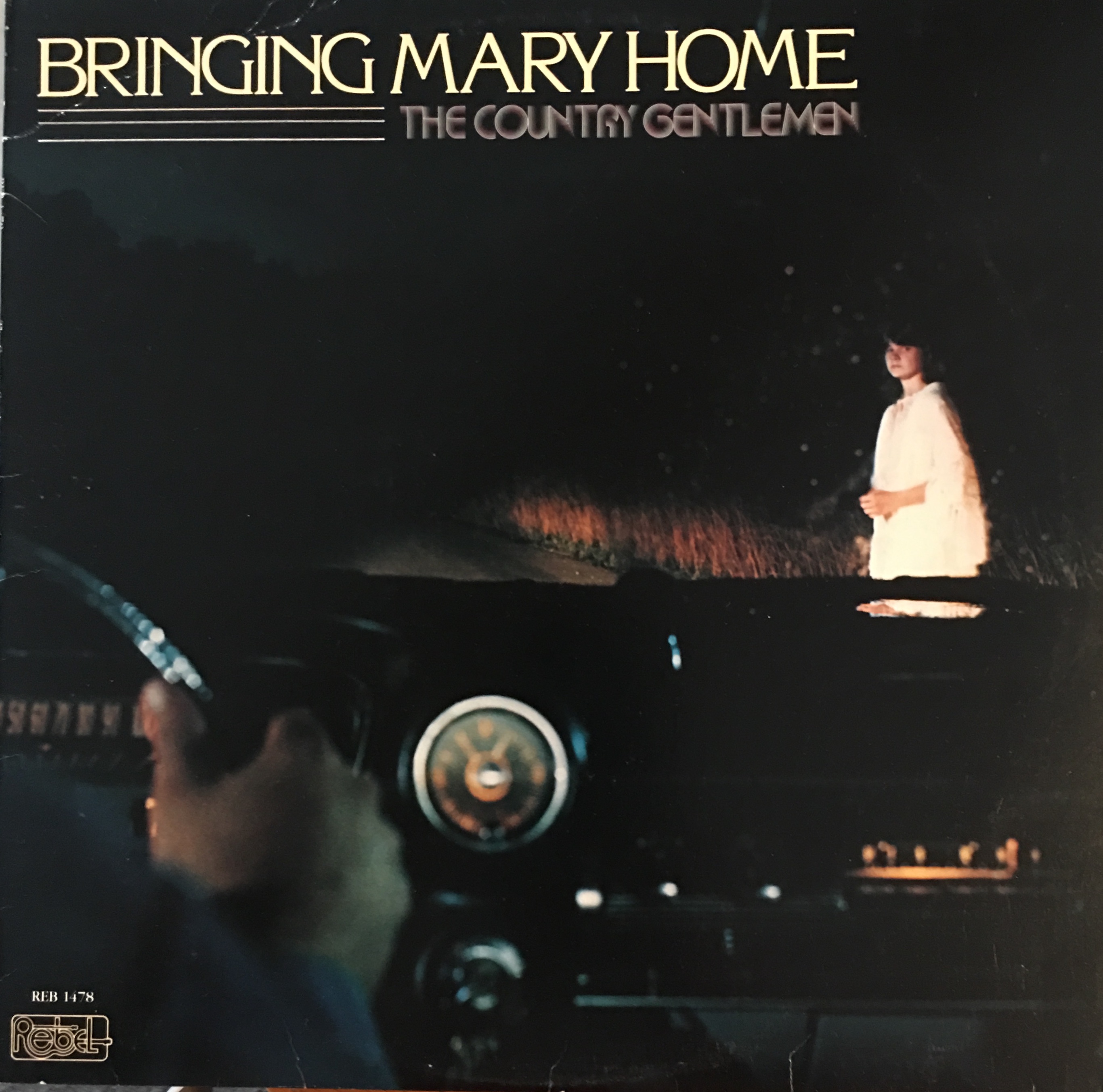
Bluegrass bands took it up in the 1960s. Pete Goble and Bill Gill released it as a single on Happy Hearts in October 1962. The Country Gentlemen recorded it at Syracuse University on 24 February 1965 for Bringing Mary Home (Rebel, 1966). The Kentuckians, with Red Allen and Bill Emerson, recorded it for Solid Bluegrass Sound of the Kentuckians (Melodeon, 1966). Charlie Moore and Bill Napier recorded it at King’s Cincinnati studio on 3 April 1966 for an LP titled Country Music Goes to Viet Nam.
Ralph Stanley and the Clinch Mountain Boys recorded it on 29 March 1978 at Lemco Studios in Lexington, Kentucky, with Charlie Sizemore and Junior Blankenship on guitars, Danny Marshall on mandolin, Curly Ray Cline on fiddle and Jack Cooke on bass. Rebel made it the title track of the album that year. Stanley cut it again in 1992 in Nashville with Dwight Yoakam singing, for Saturday Night & Sunday Morning (Freeland). The Osborne Brothers recorded it at Hilltop Studio in Nashville on 12 November 1998; it was released in 2003 on Detroit to Wheeling (Pinecastle).