“A Tiny Broken Heart” comes from the Louvin Brothers’ first album for Capitol, Tragic Songs of Life. Ira and Charlie Louvin recorded it on 4 May 1956 at Music City Recordings on 16th Avenue South in Nashville, with Ken Nelson producing; Ira played mandolin and Charlie guitar, backed by Paul Yandell and George McCormick on guitars, Lightnin’ Chance on bass and Buddy Harman on drums. Several of the album’s songs are credited as traditional, but this one carries a writer’s credit shared by the two brothers and Eddie Hill. Capitol released the LP in October 1956.
The story is told through a small farm boy. He is playing with the little girl next door when a truck pulls up at her family’s cottage and men from town start loading it, and his father tells him the neighbors are moving. The boy, only seven, insists that his father does not understand what a young heart can feel, and that he will be a man some day. His father explains that the man who owns the farm has decided it: winter has come, the work is done, and the family has to go. The boy offers to buy the farm so they can stay, and to give them his Christmas toys and the pennies in his piggy bank, money his little sweetheart helped him save.
Hazel Dickens and Alice Gerrard, then Alice Foster, recorded the song in 1965 at Mastertone Studio in New York, Alice singing lead and Hazel tenor, with David Grisman on mandolin, Lamar Grier on banjo and Billy Baker on fiddle. It came out on their Folkways LP Won’t You Come & Sing for Me in November 1973; the two also sang it at the Newport Folk Festival in July 1966. Doc Watson recorded it at Deep Gap, North Carolina, in 1973, singing with Rosa Lee Watson, and that recording appeared in 1994 on the Doc Watson Family’s Songs from the Southern Mountains (Sugar Hill). Joe Val and the New England Bluegrass Boys put it on Bound to Ride (Rounder, 1979), and the Bluegrass Cardinals cut it at Studio 19 in Nashville for Home Is Where the Heart Is (Sugar Hill, 1984), with David Parmley singing lead and Larry Stephenson tenor.
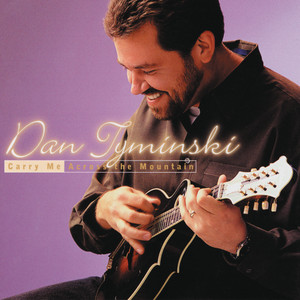
Dan Tyminski recorded it at Doobie Shea Studios in Boones Mill, Virginia, for his 2000 album Carry Me Across the Mountain (Doobie Shea), singing lead with Alison Krauss on tenor and Barry Bales on baritone, and Jim Mills on banjo, Adam Steffey on mandolin and Aubrey Haynie on fiddle. He sang it again with Alison Krauss & Union Station at the Louisville Palace on 29 April 2002 for the band’s Live album (Rounder, 2002). Peter Rowan included it on Carter Stanley’s Eyes (Rebel, 2018), and Boone & Foster on Smoky Mountain Favorites (Mountain Fever, 2023).
Assisted by AI.
Spot something off? Help us fix it.