

Musicians
- Jim McReynolds — Guitar
- Ray Edenton — Guitar
- Jesse McReynolds — Mandolin
- Allen Shelton — Banjo
- Jim Brock — Fiddle
- Floyd "Lightning" Chance — Bass
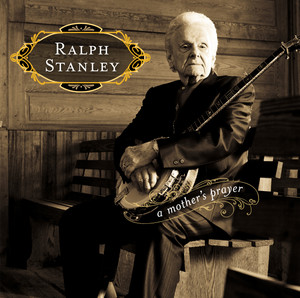
By:Elisha Hoffman · Source Recording: Ralph Stanley (2011)Song details
Are you washed (are you washed) in the blood (in the blood)
In the soul cleansing blood of the Lamb
Are your garments spotless are they white as snow
Are you washed in the blood of the Lamb?
Have you been to Jesus for the cleansing power
Are you washed in the blood of the Lamb
Are you fully trusting in His grace this hour
Are you washed in the blood of the Lamb
Are you walking daily by the Savior's side
Are you washed in the blood of the Lamb
Do you rest each moment in the crucified
Are you washed in the blood of the Lamb
Lay aside the garments that are stained with sin
And be washed in the blood of the Lamb
There's a fountain flowing for the soul unclean
Oh be washed in the blood of the Lamb
That’s your free listen. With an account the band keeps going — this song and every other one, as many times through as you like, in any key, at any tempo. Free for 14 days, no card.
Start my free 14 daysClicks before the band comes in, so you start together.
Raises the tempo as the band goes round, so you build up speed.
The band goes quiet for a bar or two and you keep the time going.
By:Elisha Hoffman · Source Recording:Ralph Stanley (2011)
Elisha A. Hoffman wrote both the words and the tune of “Are You Washed in the Blood?” in 1878, while he was living in Ohio. Born in Orwigsburg, Pennsylvania, in 1839, he trained in the East Pennsylvania conference of the Evangelical Association and was ordained in 1868. He spent eleven years with the Evangelical Association’s publishing house in Cleveland, and later served Congregational churches there and Presbyterian churches in Vassar and Benton Harbor, Michigan, and Cabery, Illinois. He died in 1929, credited with more than 2,000 gospel songs, “Leaning on the Everlasting Arms” among them, and some fifty songbooks. One of those books, Spiritual Songs for Gospel Meetings (1878), was the first to print this hymn.
Each verse asks a question. Have you been to Jesus for the cleansing power? Are you fully trusting in his grace, walking daily by the Savior’s side? After each one the refrain asks again whether your garments are “spotless,” “white as snow,” and washed “in the blood of the Lamb.” The last verse becomes an invitation: lay aside the garments “stained with sin,” for “there’s a fountain flowing for the soul unclean.” The image comes from Revelation 7:14, where the saints “have washed their robes and made them white in the blood of the Lamb.” W. K. McNeil’s Encyclopedia of American Gospel Music notes that it became a marching song for the Salvation Army, and Hymnary.org finds it in more than 540 hymnals.
Ernest Stoneman and his Dixie Mountaineers recorded it for Ralph Peer in Bristol, Tennessee, on 25 July 1927, with a group of singers that included Kahle Brewer and Walter Mooney. Victor issued it backed with “Sweeping Through the Gates.” Stoneman came back to it almost forty years later, around 1966, on a gospel LP made in Nashville. Carl Story’s Rambling Mountaineers recorded it on 23 September 1952 as a quartet, with Red Rector singing lead, Story tenor, Ray Atkins baritone and Claude Boone bass, and Mercury released it in August 1953. The Louvin Brothers recorded it in Nashville on 31 October 1956 and used it to open their 1957 Capitol album Nearer My God to Thee.
In the 1960s it became a common gospel number in bluegrass. Red Allen and Frank Wakefield recorded it in Falls Church, Virginia, in September 1963 for their Folkways album Bluegrass. Jim and Jesse cut it for Epic on 20 April 1964 for The Old Country Church. The Stanley Brothers recorded it at least twice. The first was on 22 November 1964 in Baltimore, for a radio program later issued on Wango. The second was at the Rimrock studio in Concord, Arkansas, with Carter Stanley on lead and Ralph on tenor, and it came out after Carter’s death on Rimrock’s memorial album An Empty Mansion. The Country Gentlemen sang it as a four-part arrangement on One Wide River to Cross (Rebel, 1971), and Ralph Stanley recorded it again for A Mother’s Prayer (Rebel, 2011). Alan Jackson included it on Precious Memories (2006), his first gospel album, which went to No. 1 on the country albums chart.
Please choose a song.
Clicks before the band comes in, so you start together.
Raises the tempo as the band goes round, so you build up speed.
The band goes quiet for a bar or two and you keep the time going.
Clicks before the band comes in, so you start together.
Raises the tempo as the band goes round, so you build up speed.
The band goes quiet for a bar or two and you keep the time going.
Loading chord chart…
Every song and every practice tool, free for 14 days. No card, nothing to cancel. Already have an account? Log in

Free for 14 days. No card needed.
Create an account and the whole thing is yours free for 14 days — every song in the catalog, every practice tool. No card needed.
Everything free for 14 days


Plus every chart in any key, playlists and printing.
Start my free 14 daysNo card, nothing to cancel.


